

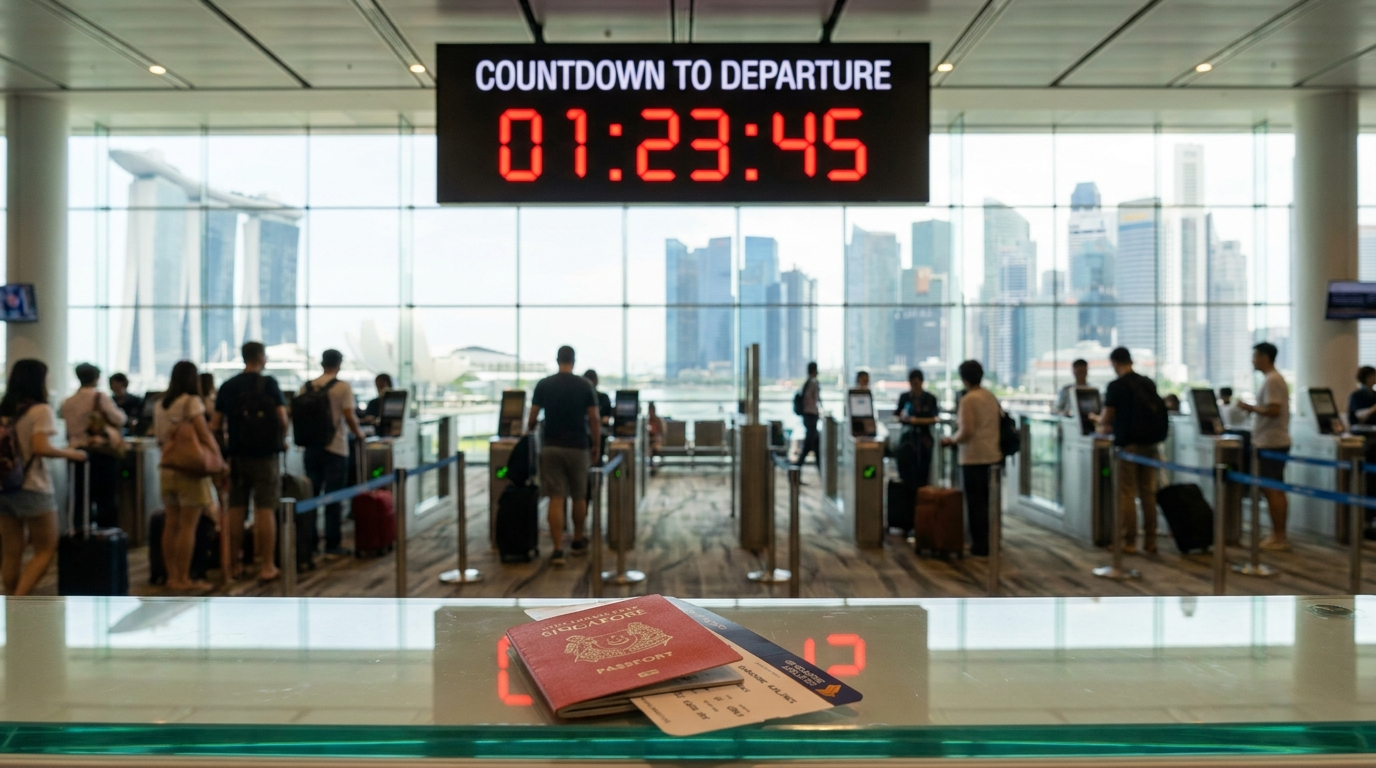
Most visitors arriving in Singapore on a foreign passport never see a paper visa stamp. ICA issues an electronic Short-Term Visit Pass (STVP), also called a Social Visit Pass, at the checkpoint, and that single record sets the clock on how long you can legally stay. For most nationalities the clock runs 30 days from the date of entry. For a few it runs 14, and for a smaller group on commercial pre-issued e-visas it runs 30 with conditions printed on the e-visa itself.
The pass is straightforward when you use it the way it was designed: short personal travel, family visits, the odd business meeting. It gets messy when people try to stretch it into a quasi-residency by stacking extensions or staying past the date on the e-Pass. This guide walks through what the pass actually is, who gets it, what you can and cannot do on it, how to extend it through ICA’s e-Service, and what happens if you let it expire.
What ICA actually calls it
The official name is the Short-Term Visit Pass. ICA uses STVP in its forms and on the e-Service. Social Visit Pass is the older, informal name still in wide use, and the two refer to the same thing for the purposes of extension and status checks.
The pass is now electronic by default. Instead of a passport stamp, you get an e-Pass tied to your travel document, and the validity is set at the counter based on your nationality and travel pattern. The duration printed on the e-Pass is what counts. A boarding-pass-style 30 days is the most common outcome, but ICA officers can issue shorter passes if something on entry doesn’t add up.
For context on how the STVP sits next to longer-term options like the LTVP and work passes, see our Singapore PR, LTVP and Work Passes guide.
Who gets it and what you can do on it
The STVP is issued to non-residents entering Singapore for short stays that don’t involve paid work. That covers tourism, visiting family on a citizen or PR’s invitation, medical treatment, short business trips for meetings and conferences, and similar non-employment activity.
The conditions are explicit. On a Social Visit Pass you cannot:
- Take up any form of employment, paid or unpaid
- Run a business, trade, profession, or occupation in Singapore
- Enrol in a long-term course of study without the right student pass
- Stay past the date printed on the e-Pass
Short business activity that doesn’t generate Singapore-source income — attending meetings, signing contracts, conducting site visits — is generally accepted under the STVP. The line ICA draws is “no profit-making activity from inside Singapore.” If you need to actually work, you need an Employment Pass, S Pass, Work Permit, or one of the niche short-term work passes, not a stretched STVP.
Travellers arriving from countries with yellow fever transmission in the six days before landing also need to show a valid Yellow Fever Vaccination Certificate at the checkpoint. The certificate becomes valid 10 days after vaccination and lasts for life. Refusing to be quarantined when the certificate is missing means denied entry for non-residents.
Need someone to look over your STVP situation before you fly? Send us your nationality, planned arrival date, and reason for visit, and we will tell you what pass you will be issued and what conditions to expect.
Default duration: 14, 30, or 90 days
ICA does not publish a single fixed duration for the STVP because it depends on nationality and the travel document. The practical picture for visitors entering at Changi:
- 30 days is the standard issuance for most passport holders, including ASEAN nationals
- 14 days applies to a small set of nationalities on stricter assessment
- 90 days is reserved for specific nationalities, typically Western Europeans, North Americans, and a handful of others, and is set by the officer based on the visit pattern
The duration printed on your e-Pass overrides any general guidance you read online. If it says 30 days, the 31st day is overstaying, regardless of whether you “usually” get 90. Always check the e-Pass after entry through the MyICA portal or the SG Arrival Card record.
How to extend the STVP through the ICA e-Service

You can apply to extend your STVP online through the ICA e-Service at ica.gov.sg/esvclandingpage/extend. Walk-in extensions stopped being accepted years ago. The portal accepts Singpass logins for sponsors and the visitor’s FIN where applicable.
When to apply
ICA asks you to submit when your STVP has 14 days or fewer left. Applying too early gets the application returned. Leave a buffer of five working days for processing.
What an extension actually grants
A first extension typically takes the total stay to about 60 days from entry. The maximum total stay ICA will consider under a stretched STVP is 89 days from the date of entry, not 89 days on top of the original pass. The 89-day maximum is only available to visitors with immediate family who are Singapore citizens or PRs, with the citizen or PR acting as local sponsor through Singpass.
For most visitors without a citizen or PR family tie, the practical ceiling is one 30-day extension on a 30-day pass, taking the total stay to about 60 days. Beyond that, ICA expects the visitor to leave or to convert to a long-stay pass.
Fees
The base extension is free in itself. A S$40 extension fee applies once the granted extension takes the total stay to 90 days or more from the date of entry, and again for each subsequent 90-day block. Plan for the S$40 if you are pushing the stay past three months.
Processing time
ICA processes extension applications within five working days, excluding public holidays and weekends. Approval lands as an updated e-Pass in MyICA. You can track the application by logging into the e-Service with the same Singpass account or FIN used at submission. For the practical mechanics of checking, see visit pass extension and status checks.
Legitimate reasons ICA tends to accept
Most STVP extensions are approved when there is a specific, time-bound reason that the visitor can show on paper. The ones that go through with the least friction:
- Medical treatment in Singapore, with a doctor’s memo on hospital letterhead naming the treatment dates
- Family emergency or end-of-life support for an immediate family member who is a citizen or PR
- A specific delayed return flight, with the airline booking confirmation
- Attending a wedding, funeral, or major family event for a citizen or PR
Vague reasons, such as “I want to spend more time here” or “I’m thinking about looking for work”, tend to be turned down. So does any extension request that smells like a substitute for a long-stay pass. ICA tracks repeat extensions and the pattern follows the file.
What happens if you overstay

Overstaying a Social Visit Pass is a criminal offence under the Immigration Act, not an administrative penalty. The consequences scale with the length of overstay and the circumstances.
For overstays of 90 days or less, a first-time offender can be fined up to S$4,000 and barred from re-entering Singapore for a period set by ICA, often six months to several years for short overstays. For overstays exceeding 90 days, the law sets a jail term of up to six months and a minimum of three strokes of the cane for male offenders, or a fine of up to S$6,000 in place of caning, plus the entry ban afterwards.
Beyond the immediate penalty, an overstay is a permanent line on the immigration record. Future applications for any Singapore pass — work pass, PR, LTVP, even another STVP — get scrutinised against that line. The honest read is that one short overstay is recoverable with explanation; a deliberate long overstay closes most doors.
If you realise you are about to overstay, the right move is to apply for extension immediately while you still have a valid pass, then book a flight out if the extension is denied. Self-reporting at an ICA checkpoint with a clear explanation is treated differently from being caught.
Practical tips for legitimate extensions
A few things consistently help when the reason for extending is genuine.
Document the reason on paper before you apply. A doctor’s letter, a hospital appointment slip, an airline rebooking confirmation, or a death certificate carries more weight than a free-text explanation in the application form.
Use a Singapore citizen or PR sponsor if you have one. Even when not strictly required, a local sponsor with a Singpass account makes the file stronger and is mandatory for the 89-day extension route.
Apply once and well, not repeatedly. Two separate 30-day extension requests on the same trip is a pattern ICA notices. One 60-day extension request with a clear medical or family reason is cleaner.
Keep a copy of every e-Pass and approval letter. ICA holds the official record, but having your own copies of every pass on file matters when a future application asks about prior stays.
If your stay is genuinely going to run beyond three months, stop trying to extend and apply for the right long-term pass. An LTVP for spouses or parents of citizens and PRs, a Dependant’s Pass attached to a work pass, or a fresh Employment Pass application is the right answer past the 90-day mark, not a third STVP extension.
Trying to work out if your reason for extending will fly? Our consultants will look at your case, the supporting documents, and your immigration history, and give you a straight read on the odds before you submit.