

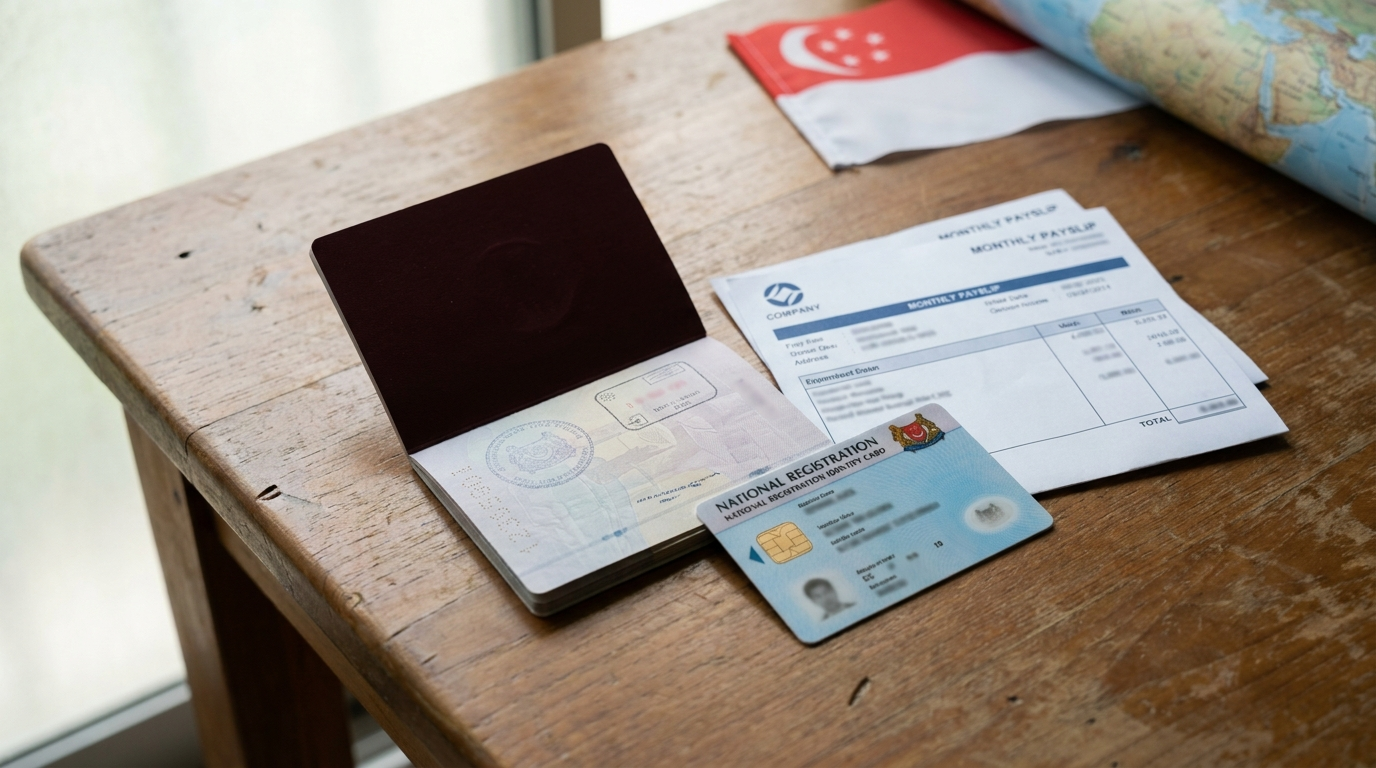
Most people who file a Singapore PR application have already been here for years. They know the EP renewal cycle, they have a Singpass, and they have probably watched at least one colleague get a polite rejection letter for reasons nobody fully explains. The question is not whether to apply at some point. It is whether your file, in its current shape, has a real chance.
This guide walks through what ICA actually looks at, which scheme applies to you, what documents the e-PR portal asks for in 2026, and what to do about the parts most people get wrong. It sits inside the broader Singapore PR, LTVP and long-term passes guide, which covers work passes and family passes alongside PR.
Which scheme applies to you
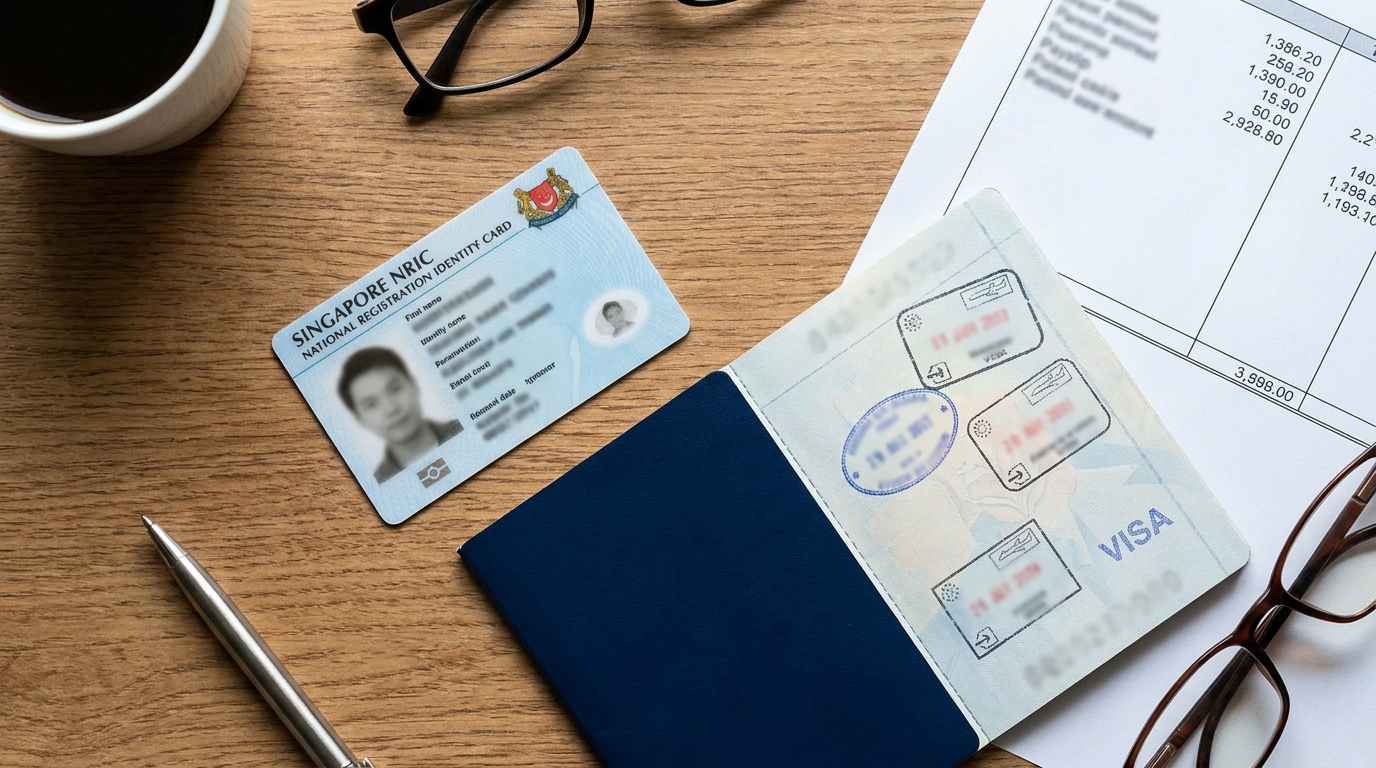
ICA assesses every PR application under one of four schemes. The one that applies to you is decided by your current pass and your relationship to Singapore, not by which one sounds friendliest.
The Professionals, Technical Personnel and Skilled Workers (PTS) Scheme covers anyone currently holding an Employment Pass, S Pass, Personalised Employment Pass, or EntrePass. This is the route most working professionals use. Within PTS, ICA looks at two sub-tracks: Professionals (the EP-heavy track) and Skilled Workers (the S Pass and technical track). You do not pick which one you fall into. ICA assigns it based on your pass and salary band.
The Family Ties Scheme covers the spouse and unmarried children under 21 of a Singapore citizen or PR, plus aged parents of a Singapore citizen. Approval rates on this route are meaningfully higher than PTS because the case for residency is harder to argue against. If you are eligible for both PTS and Family Ties, you generally file under Family Ties.
The Global Investor Programme (GIP) is the high-net-worth route, run by EDB rather than ICA. The minimum bar starts at a S$10 million commitment to a Singapore business, with separate tracks for fund investments and family offices. If you are reading this article, you almost certainly do not qualify for GIP.
The Foreign Artistic Talent (ForArts) Scheme is a niche route for arts professionals with a documented track record of contribution to Singapore’s arts scene. It is jointly administered by ICA and the National Arts Council and is rare enough that most consultants will go entire years without filing one.
The unwritten PTS baseline
ICA publishes no points calculator and no qualifying salary for PR under PTS. The official guidance is that EP and S Pass holders need at least six months of continuous employment before applying. In practice, six months is the floor, not the standard.
Most successful PTS applications come from people who have been on a work pass for two to three years, with at least one full Year of Assessment of Singapore tax filings on record, and a fixed monthly salary somewhere between S$6,000 and S$8,000 before the application becomes competitive. Higher salary bands carry more weight as you move up the age scale. Below the salary range, the application fee and the cooldown after a no aren’t worth it.
Beyond the headline numbers, ICA gives weight to length of stable employment, salary progression and promotions, qualifications and field, the employer’s place in the Singapore economy, age, family situation, and signs of integration like community involvement and family already settled here. The system rewards a steady arc more than a single spike.
What the e-PR portal asks for
The entire application now runs through the ICA e-Service portal at eservices.ica.gov.sg, accessed with Singpass. Hard-copy submission at the front end is gone. Once you log in, you fill out the electronic form, upload documents, pay the application fee online, and receive an acknowledgement.
The core document set in 2026 is shorter than it used to be:
- Passport bio-page and current pass
- Birth certificate
- National identity card from your home country
- Educational certificates and academic transcripts
- Employment support letter from your current employer, stating role, employment date, and salary
- Last six months of payslips
- For self-employed applicants, ACRA BizFile and the last three years of profit and loss statements
Two things changed in the last eighteen months that catch out applicants working from older checklists. ICA now pulls IRAS tax data directly, so you no longer need to submit Notices of Assessment for Singapore-earned income. And the Annex A employer declaration form, which used to be a separate signed document, was discontinued in mid-2024 when ICA revamped the e-PR portal. If you are working overseas, three years of foreign tax assessments are still required.
Family members get appended to the same submission. Your legally married spouse and unmarried children under 21 can be included as dependants in a single application. Each person is still assessed individually, but the principal applicant’s profile carries the file. Common-law partners and stepchildren cannot be included.
The fees, plainly
The submission fee is S$100 per applicant, paid at the point you click submit through the e-PR portal. It is non-refundable, regardless of outcome. ICA collects this from every name on the application, including spouse and children.
If the application is approved, three more fees come up before the blue NRIC is in your hand:
- S$20 for the Entry Permit per approved applicant
- S$50 for the Identity Card, for PRs aged 15 and above
- S$10 per year of validity for the Re-Entry Permit. Most first-time approvals come with a five-year REP, which is S$50
A common rule of thumb is to budget roughly S$220 in government fees per successful applicant. That is before any consultant fees, document translation, or notarisation, which most applicants do not need.
Wondering if your salary band and work history actually clear the current ICA bar? Send us your pass type, salary, length of service, and family situation and we will give you an honest read before you spend the application fee.
Processing time and the realistic timeline
ICA’s stated processing time is within six months from submission, provided all required documents are submitted and in order. ICA does not publish a lower bound. In current conditions, six months is closer to the median rather than the floor, and complex profiles (mixed-country income, recent job changes, family members applying from overseas) often run to nine or twelve months. The standalone Singapore PR processing time page breaks this down by profile type.
You can check status through the e-Service portal using your application reference number. ICA does not push interim updates and does not respond to “how is my application going” emails. The status either flips to a decision or it does not. Calling to ask rarely helps.
While the application is under review, you must keep a valid work pass at all times. A lapse in EP coverage during PR processing is one of the cleaner ways to invalidate an in-flight application. If your EP renewal falls inside the PR review window, file the renewal on time and do not let the pass expire while you wait.
Rejection signals worth watching
ICA does not publish reasons for rejection. The patterns most consultants see are consistent:
Applying too early. Six months of employment is the floor, not the recommended timeline. Files at twelve to eighteen months on a single EP, with one Year of Assessment, frequently come back as a no.
Employer-specific PR. ICA gives weight to your role in the economy, not your role at a particular company. If your application reads as PR tied to one short-term project, the chance of approval drops. A multi-year track at one employer, or a clean progression across two employers in the same field, reads better than a one-year stint at a name-brand firm.
Length of stay. Stretches of being out of Singapore for extended periods during the qualifying years weaken the file. The system is reading for residency, not for citizenship of convenience.
Salary stagnation. Three years on the same pass at the same fixed monthly figure suggests the role has plateaued. ICA is more comfortable with files that show progression in the recent twelve to twenty-four months.
Thin family ties. Single applicants with no family in Singapore are not disqualified, but the file is competing against married applicants with Singaporean children. That gap shows up in approval rates.
What happens if the answer is no
If ICA declines the application, the rejection letter lands through the e-Service portal. There are two options from there.
You can appeal within six months of the rejection date. An appeal works only when there is new information to bring forward: a promotion, a salary jump, a marriage, a new local hire under your team. An appeal that simply restates the original case is almost always rejected. Most appeals take four to six months for a decision.
You can wait six months from the rejection date and submit a fresh application. This is the cleaner path for files where the underlying profile needs more time to develop. Use the cooldown to strengthen the application: another full Year of Assessment on file, a clearer salary trajectory, more time at one employer. Most consultants will recommend a reapply over an appeal unless something has materially changed in the file.
If an appeal is filed and also rejected, the practical cooldown stretches to twelve to twenty-four months before a fresh application becomes worth attempting. ICA has now reviewed the case twice within a short window and will be reading for what has actually changed.
After approval: what PR actually buys you
Approval triggers a window to complete formalities at ICA. You collect the Entry Permit, pay the IC and REP fees, and receive the blue NRIC. The Re-Entry Permit is what keeps PR alive while you travel. Under the rules in force from 1 December 2025, a PR who is overseas without a valid REP has 180 days from the date they are first outside Singapore without a valid REP to apply for a new one (or from 1 December 2025, if they were already overseas without a valid REP on that date). Inside that window, PR status is retained pending the outcome. Miss the 180 days and PR status is lost, with no reinstatement path: anyone in that position has to file a fresh PR application from scratch. Renewal happens online through the same e-PR system on the e-Service portal — the Electronic PR portal walks through the renewal interface specifically.
A few things change immediately. You can buy HDB resale flats subject to ethnic quotas, contribute to CPF as a PR rather than as a foreign employee, and switch employers without applying for a new work pass. Your children become eligible for local school admission on PR rates.
A few things do not. PR is not citizenship. You still travel on your home country passport, you still need the REP to come back, and male PRs whose sons become second-generation PRs trigger National Service obligations. The trade-off between staying on PR indefinitely and converting to citizenship comes up later, and the Singapore PR vs citizenship comparison covers the specifics.
ICA targets roughly 40,000 new PR approvals per year for 2026 to 2030, up from around 35,000 in recent years. The number has moved up over the last cycle, but the bar at the file level has not loosened. The applications that make it through are the ones where the profile reads as someone Singapore would rather keep than lose.
Ready to file, or want a second pair of eyes on your documents before you do? A profile review covers your salary band, employment history, family situation, and scheme choice in one session.