

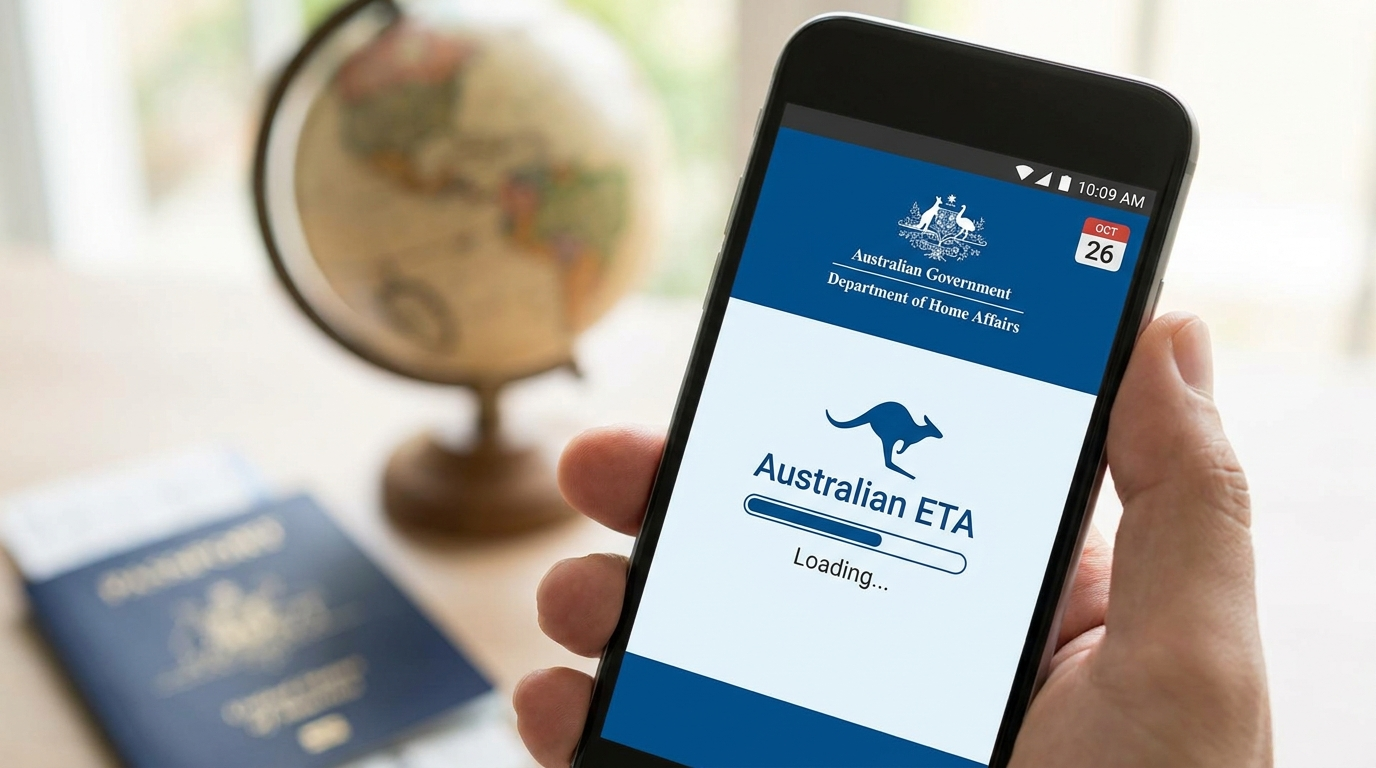
Processing time is usually what decides whether you book the flight today or wait another week. Singaporeans are lucky here. Most ETA approvals come back within minutes, and even Visitor Visas tend to clear faster than they do for applicants from many other countries.
Fast on average is not the same as fast every time. The aim of this guide is to give you realistic expectations for each visa type Singaporeans actually use, the things that slow an application down, and how early to apply so you are not refreshing your inbox the night before a flight.
Australia Visa Processing Time at a Glance
The Department of Home Affairs publishes 50th and 90th percentile processing times by visa subclass and updates them every month. For applications submitted from Singapore, the realistic ranges look like this:
- Electronic Travel Authority (ETA, Subclass 601): minutes to 24 hours for the bulk of cases. Up to 72 hours when something flags for human review.
- Visitor Visa (Subclass 600), Tourist Stream: half decided within 11 days, 90 percent within 23 days for offshore applications.
- Visitor Visa (Subclass 600), Business Stream: half within 14 days, 90 percent within 28 days.
- Work and Holiday Visa (Subclass 462): anywhere from a few days to around 70 days, mostly driven by how complete the documentation is.
- Student Visa (Subclass 500): roughly two to four weeks for Singapore applicants in normal periods.
- Transit Visa (Subclass 771): usually one to fourteen days.
The applications that drag past the 90th percentile are real, but they are the exception. They tend to land on people who applied in the final week before flying, with documents that did not quite line up.
Australia Tourist Visa Processing Time
ETA Processing: Minutes for Most Singaporeans
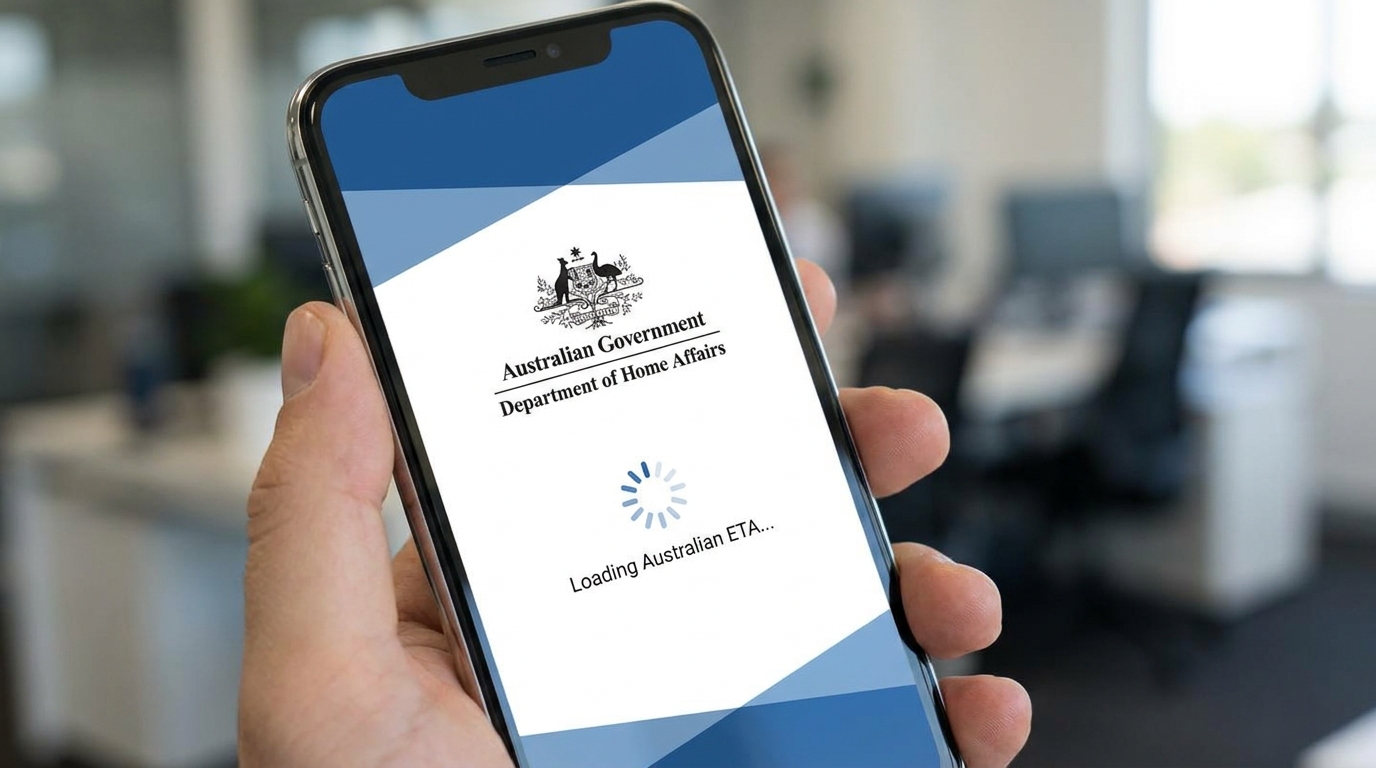
The ETA is the fastest Australian travel authorisation a Singapore citizen can get. You submit through the official app, the system runs automated checks against immigration databases, and if nothing trips a flag, the grant notice usually arrives by email before you have put your phone down.
When ETAs do take longer, the cause is almost always one of a small set: a passport scan the app could not read cleanly, a declared conviction or health issue that needs human eyes on it, or a mismatch with an old Australian visa record under a different spelling of your name. Once a case officer is involved, processing can stretch to 72 hours, sometimes a few days more.
The Department of Home Affairs is explicit that ETAs cannot be expedited, even when you can show confirmed flight bookings. Apply at least a week before you fly to give yourself room. For a fuller walkthrough of the ETA itself, our Australia ETA application guide for Singaporeans covers eligibility and the step-by-step submission.
Subclass 600 Visitor Visa Processing
The Subclass 600 takes longer because it is a properly assessed visa rather than a database check. For the Tourist Stream applied from Singapore, half of all applications are decided within 11 days and 90 percent within 23 days. The Business Visitor Stream sits slightly behind that.
One thing applicants get wrong: the clock starts when you submit a complete application with all supporting documents and biometrics, not when you create the ImmiAccount. If a case officer comes back asking for more information, the timer effectively pauses until you respond. We cover the eligibility and documentation requirements in detail in our Australia tourist visa requirements and fees guide.
Need help applying for the right Australian visa? Our consultants can review your case, choose the correct visa type, and prepare a complete application that does not stall in processing.
What Affects Australian Visa Processing Time

The published processing times assume a clean application from a low-risk applicant. A few things commonly push you towards the slower end of the range, or beyond it.
The biggest one is application completeness. Missing documents are by far the most common reason Subclass 600 applications stall. Submit without bank statements, proof of accommodation, or evidence of ties to Singapore and you will almost certainly receive a request for further information. That request alone tends to add one to two weeks before anything else happens on your file.
Time of year matters too. The Department gets noticeably busier between October and March, when northern hemisphere travellers are applying for Australian summer holidays. Singapore school holidays in June and December create their own local spikes. Build in extra buffer if you are flying during any of those windows.
Anything you have declared on the character or health questions also slows things down. A conviction, even something minor, routes the file to a human assessor. Same with a serious medical condition. These reviews are measured in weeks, not days.
Visa history is another lever. Previous Australian refusals, overstays, or compliance issues will flag your file for closer review. And while Singapore citizens sit in a low-risk category, which is the main reason processing here is faster than for most other nationalities, Singapore PRs travelling on a passport from a higher-risk country face longer waits even when applying from Singapore.
When to Apply Before Your Trip
The right lead time changes by visa type, and the honest answer is rarely “the minimum required”.
For an ETA, apply at least a week before flying. Make it two weeks if you have any character or health declarations to make. Do not book non-refundable flights before you have the grant in writing. The Department disclaims responsibility for losses caused by processing delays, so the risk lives entirely with you.
For a Subclass 600 Visitor Visa, six to eight weeks is the working number. That covers the 90th percentile processing time and leaves enough room to respond to a document request without blowing past your departure date.
For a Student Visa or Work and Holiday Visa, give yourself two to three months. Student Visa processing also requires your Confirmation of Enrolment and Overseas Student Health Cover to be in place before you submit, and lining those up adds its own lead time.
For a Subclass 771 Transit Visa, two to three weeks is enough in most cases. If you are connecting through Australia within the international transit area for less than eight hours, a transit visa may not even apply to you.
What to Do If Your Application Is Taking Too Long
Check your application status in ImmiAccount before you do anything else. The status field tells you whether your file is in queue, under assessment, or waiting on something from you. A surprising number of “delayed” applications turn out to be cases where a case officer requested documents weeks ago and the email is sitting unread.
If your application has genuinely passed the published 90th percentile and there is no outstanding request from the Department, you can submit a status enquiry through ImmiAccount. The Department will not expedite without a substantive reason, and a confirmed flight booking is not one of them.
If you are facing a hard travel deadline that genuinely cannot be moved, raising the issue through your local Member of Parliament’s office in Singapore, in writing, sometimes prompts a status check. Treat that as a last resort, not a strategy.
The boring truth is that most processing delays are self-inflicted. Apply early, submit a complete application the first time, and you will almost never need any of the above.
Stuck waiting on a delayed visa application? OCSC can review your file, work out what is causing the hold, and help you respond to any outstanding requests from the Department.