


Most Singaporeans who migrate to Australia handle some of their own paperwork and hire help for the parts that matter most. A migration agent is one of the few places where a few thousand dollars can shift the outcome of a years-long process, but only if you pick the right one. The regulatory side is worth understanding before you make any calls.
The quick version: Australia regulates the people who give immigration advice, Singapore does not, and anyone charging you for advice about an Australian visa should be registered with MARA. Everything else, what they cost, what they actually do, and whether you need one, depends on your situation.
What a migration agent in Singapore actually does
A migration agent in Singapore to Australia is usually one of two things. Some are lawyers or consultants based in Singapore who hold Australian migration agent registration. Others are Australian-registered agents working through a Singapore office or representative. The useful ones handle the strategy end of your application: visa subclass selection, points optimisation, occupation nomination, state selection, skills assessment sequencing, and the wording that goes into your employer references.
A good agent will not just fill out forms. Forms are the last 5% of the work. The real value sits earlier, deciding whether you should be targeting Subclass 189 or 190, whether your occupation assessment will be stronger with ACS or VETASSESS, whether your points score can be pushed past the current cut-off with a partner skills assessment or a NAATI credential, and which state programs are worth applying to given your profile. Our Australia PR points calculator breaks down where the points actually come from.
Australia immigration consultants also handle correspondence with the Department of Home Affairs, respond to case officer requests on your behalf, and flag policy changes that might affect your lodged application. For a file that sits in processing for six to fifteen months, that monitoring matters.
MARA registration: the only credential that counts
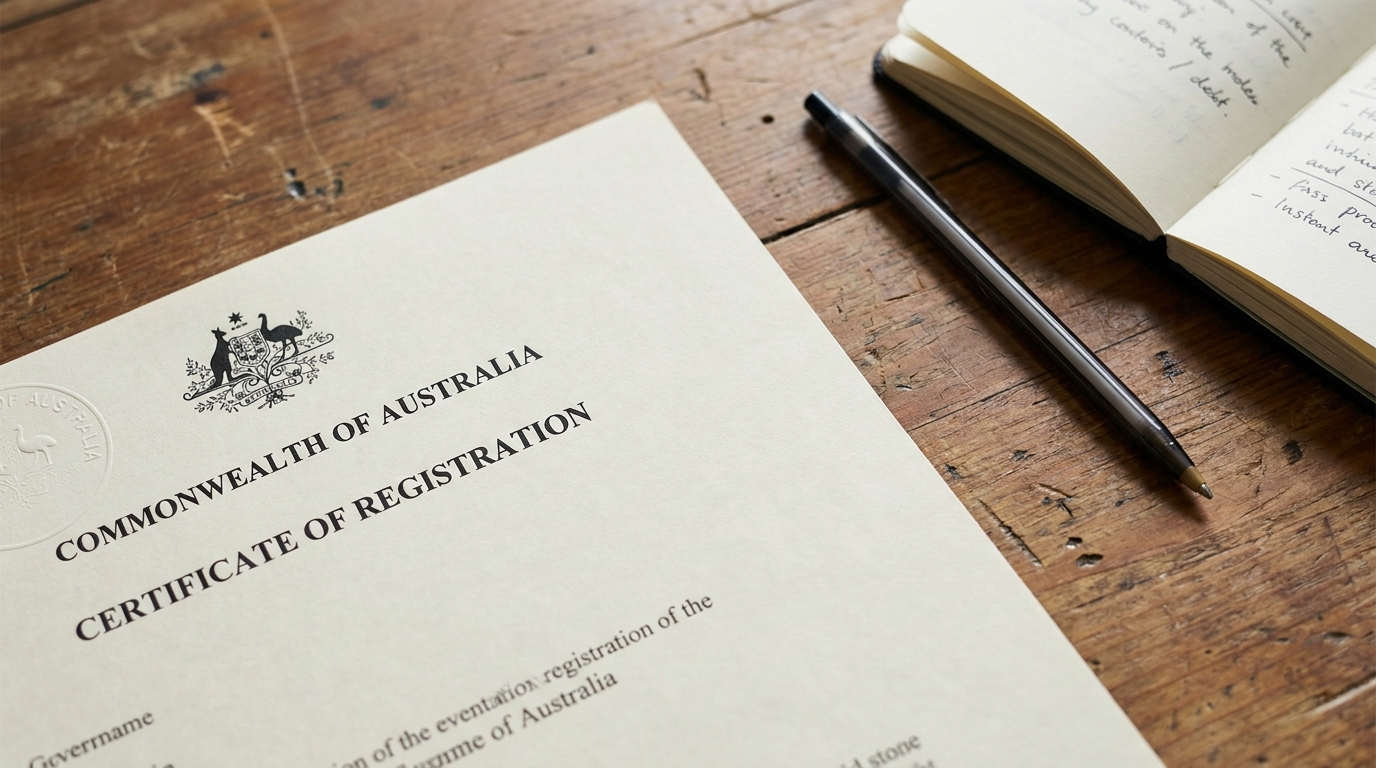
The Office of the Migration Agents Registration Authority (MARA) is the Australian federal body that licenses Registered Migration Agents (RMAs). Anyone charging for advice on Australian visas needs to be either a MARA-registered RMA or an Australian immigration lawyer; lawyers were removed from the MARA register in March 2021 and are now regulated separately through their state law society. Unregistered advice-for-fee is an offence under Australian law, even if the adviser sits in Singapore.
Check before you sign. MARA keeps a public register at the Office of the MARA website where you can search any agent by name or MARN (Migration Agents Registration Number). The record shows the agent’s current registration status, any conditions on their licence, and any disciplinary history. Ask any Singapore-based consultant for their MARN up front. If they cannot produce one, or they point you at a staff member who is registered while the consultation is run by someone who is not, walk away.
Singapore has no equivalent regulator for Australian migration advice. A firm can call itself an immigration consultancy without any accreditation at all. MARA is the floor, not the ceiling.
What to look for and what to avoid
The good ones tend to share a few traits. They ask questions before they quote. They explain which visa pathway fits your profile and why the others do not, rather than pushing the most expensive option. They put the fee structure in writing with a clear scope. They set realistic timelines rather than promising a visa by a specific date. They decline cases they cannot help, instead of taking the money and trying.
Red flags are usually easier to spot than green ones.
A guaranteed-visa promise is the clearest warning sign. No agent controls Department decisions, and anyone who says otherwise is lying or criminal. High pressure to decide on the spot is another. An agent who insists on a same-day deposit before you have compared options is working on commission, not your outcome.
Watch for agents who bundle compulsory third-party fees into opaque package prices. Skills assessment fees, English test fees, visa application charges, and state nomination fees are all paid to external bodies at fixed rates. A proper engagement letter separates the agent’s professional fee from disbursements paid to the Department, assessing authorities, and state governments.
Finally, be cautious of firms that only specialise in one destination but claim expertise in many. Australia migration law changes often enough that staying current is a full-time job. A Singapore firm that handles US, Canada, UK, Europe, and Australia with the same three people is usually not deep on any of them.
Want a second opinion on an agent you are considering? A short consultation clarifies what you should actually be paying for and what a sensible engagement looks like.
Typical pricing in the Singapore market
Professional fees in Singapore for a skilled migration file typically run SGD 5,000 to SGD 15,000 for a primary applicant. The spread reflects genuine differences in scope. At the lower end you usually get document checking, EOI lodgement, and basic visa application support. At the higher end you get strategic planning from the outset, occupation and subclass selection, state nomination strategy, reference letter drafting support, and end-to-end case management through to grant.
Add-ons are common. Partner skills assessments and separate partner visa work are usually quoted in addition to the primary file. Employer-sponsored cases sit in a different bracket because the sponsorship and nomination work doubles the workload. Complex family situations, prior visa refusals, adverse health findings, or character issues all push the quote higher.
Payment is usually staged. A deposit at engagement, milestones at skills assessment lodgement and EOI submission, and a final tranche on visa grant or lodgement. Watch for firms that demand the full fee upfront.
The Department of Home Affairs charges are separate and non-negotiable. The base fee for a primary applicant on a Subclass 189 or 190 is AUD 4,765, with secondary adult applicants at AUD 2,385 and dependent children at AUD 1,195. Skills assessment fees run SGD 500 to SGD 1,500 depending on the assessing body. State nomination fees range from zero to AUD 300 depending on the state. Budget at least AUD 7,000 in government and third-party fees on top of any professional fee.
When an agent earns the money and when you are fine without

Plenty of Singaporeans do their own Australia PR applications and succeed. If your case is simple, you can work through how to apply for Australia PR without paid help. A simple case usually means a clear skilled occupation that obviously matches your job history, comfortable points above the current invitation cut-off, no partner complications, no prior refusals, and no health or character issues to disclose.
Agents earn their fee in four kinds of situations.
The first is borderline points. If you are sitting at 80 points and the invitation cut-off for your occupation is 85, an agent who knows where the recoverable points are, partner skills, NAATI, state nomination, professional year, English retest, can often surface 10 to 20 points you did not realise you had. Knowing this landscape matters because the Australia skilled migration guide changes year to year.
The second is employer-sponsored cases. The 482 to 186 pathway involves the sponsoring employer, the Department, the position nomination, and sometimes the labour market testing process. The paperwork is easier to get wrong and the employer is not always fluent in migration law. An agent who can brief the HR team and handle the nomination file removes a lot of friction.
The third is complex family or case histories. Prior visa refusals, previous non-compliance, dependents from multiple marriages, adopted or step-children, or health conditions that trigger the health waiver process. These cases need experience, not just knowledge. Agents who have seen a few refusals overturned know where the written submissions need to land.
The fourth is when you simply do not have time. Skilled migration is a minimum of 100 hours of applicant time if you do it yourself; for senior executives, business owners, or dual-income families with young children, outsourcing is often the rational choice even when the case is straightforward.
The cases that do not need an agent are the genuinely simple ones. If you are under 33, on the MLTSSL in a well-understood occupation, at 90 or more points without needing creative additions, with clean documents and no complications, the application is mechanical. Pay the Department, follow the sequencing in the Australia PR requirements for 2026, and keep copies of everything.
Thinking about whether your case is straightforward enough to DIY? We can walk through your profile in one conversation and tell you honestly whether an agent adds value for you.