

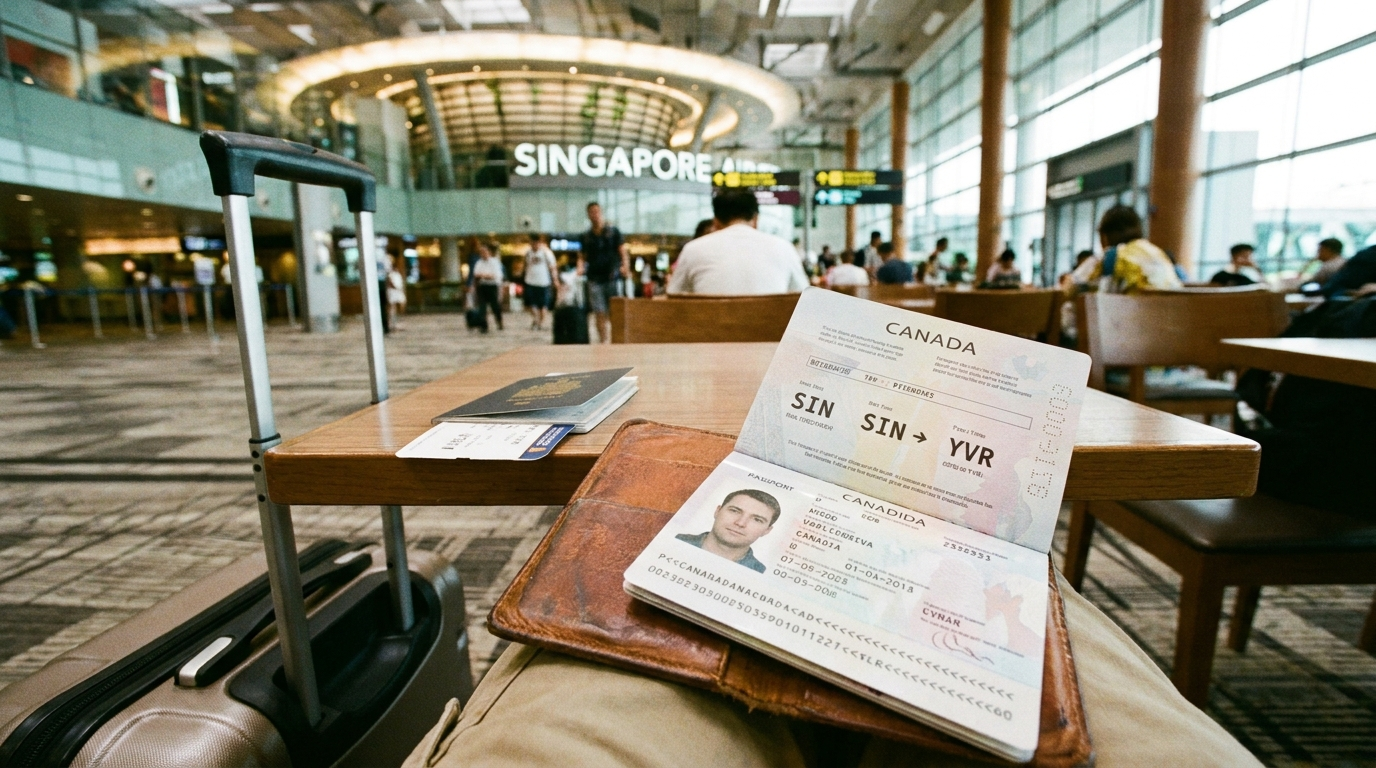
Calling this a “Singapore visa for Canadians” is slightly misleading. Canadian passport holders don’t need a visa to enter Singapore for tourism or business. ICA grants a Social Visit Pass on arrival, free of charge, with no application to file before the trip.
The article you actually need is closer to a checklist: passport rules, the SG Arrival Card, what changes on 30 January 2026, and the few situations where a Canadian traveller genuinely does need to file something. We’ll cover the edge cases too, particularly Canadian PR card holders who don’t carry a Canadian passport, and the 96-hour transit option for travellers passing through Changi.
Who actually gets visa-free entry
A Canadian citizen holding a valid Canadian passport gets visa-free entry. Canada sits on ICA’s visa-exempt list, which means no SAVE application, no e-Visa, no fee. The Visit Pass is issued at the checkpoint when you clear immigration at Changi or any land crossing.
The two cases that catch people out are travellers carrying something other than a Canadian passport. A Canadian Permanent Resident with a PR card but a passport from a visa-required country still needs a Singapore entry visa. Assessment Level 1 passports (India, China, and most others on the visa-required list) can route through SAVE with a Singapore contact; Assessment Level 2 passports (Pakistan, Nigeria, and a smaller high-scrutiny list) generally go through the Singapore embassy or consulate. The PR card doesn’t change the visa requirement; the passport does.
A narrow second route exists for some travellers: the 96-hour Visa Free Transit Facility. CIS nationals plus Georgia, Turkmenistan, and Ukraine qualify with just an onward air ticket departing within 96 hours. Indian and selected PRC nationals qualify only if they also hold a valid visa or long-term pass for Australia, Canada, Germany, Japan, New Zealand, Switzerland, the UK, or the USA. Holding a US or UK visa doesn’t help if the passport itself isn’t on the eligible-nationality list. We’ll come back to this.
How long you can stay
Travel.gc.ca, Canada’s official advisory, states that no visa is required for tourist or business stays of up to 30 days. That aligns with the commonly cited norm for Canadian tourists on arrival.
ICA issues Social Visit Passes in 14, 30, or 90-day durations, and the duration is determined by the ICA officer at the checkpoint. Thirty days is the more commonly cited stamp for Canadian tourists; 90 days is possible but not the default. Have your onward ticket and accommodation booking ready before reaching the counter.
Stays beyond 90 days for tourism are not allowed. If your plans involve work, study, or long-term family visits, you need a different pass entirely (Employment Pass, Student Pass, Long-Term Visit Pass), and you cannot convert from a tourist entry on the ground.
Passport, onward ticket, sufficient funds
Three things every Canadian arrival needs:
A passport with at least six months of validity from the date you enter Singapore. ICA enforces this strictly. A passport that expires in five months and twenty-nine days will be denied boarding by the airline before you ever get to immigration.
Proof of onward travel. A return or onward flight booking, ferry to Batam or Bintan, or a confirmed bus ticket to Malaysia all qualify. ICA officers don’t always ask, but airlines at the Canadian end usually do.
Evidence of sufficient funds for the duration of your stay. There’s no published threshold, but a credit card, bank statement, or visible accommodation booking covers it for a typical trip.
Coming from Toronto, Vancouver, Montreal or elsewhere and want a pre-trip review of your documents? We sanity-check passport validity, SGAC eligibility, and any visa edge cases before you fly.
The SG Arrival Card and No-Boarding Directives
Every traveller to Singapore has to submit the SG Arrival Card (SGAC) within the three-day window before arrival, including the day of arrival itself. It’s free, online, and takes a few minutes. Filing it earlier than three days out won’t be accepted; filing it too late can hold you up at check-in.
The SGAC asks for travel details, accommodation in Singapore, and a short health declaration. It replaces the old paper disembarkation card and is mandatory regardless of whether you have a visa or not.
From 30 January 2026, ICA started issuing No-Boarding Directives (NBDs) to airlines flying into Changi and Seletar. The system uses advance traveller data, including the SGAC, to screen passengers before they board. Travellers flagged as ineligible (criminal records, invalid travel documents, missing SGAC submission) can be denied boarding at the origin airport. Airlines face fines of up to S$10,000 for letting flagged passengers board.
What this means for Canadians: submit the SGAC, make sure your passport is valid, and don’t show up with a six-month-expired visa anywhere in your travel history without context. The system is built to catch problem cases, not routine tourists, but it does mean the immigration check now starts at your departure gate.
Cannabis is a hard line
Cannabis is legal for recreational use across Canada. It is illegal in Singapore under any circumstance, and the penalties are severe.
The consumption-abroad provision in the Misuse of Drugs Act (Section 8A) applies only to Singapore citizens and permanent residents. A Canadian tourist who used cannabis legally in Canada before the flight is not, on that basis alone, prosecutable under Singapore law. The Central Narcotics Bureau (CNB) does have authority under Section 31 to require selected travellers to submit to a urine test, but the real legal exposure sits with anything consumed or possessed on Singapore soil.
Possession or consumption of cannabis in Singapore carries up to 10 years in prison and a fine of up to S$20,000. Trafficking over 500 grams carries a mandatory death sentence. Vapes containing cannabis derivatives, edibles, and CBD products all fall under the same rules. Don’t pack any of it, even residue in a backpack pocket.
The Canadian government’s travel advisory for Singapore explicitly warns about this. Take it seriously.
When you transit through Changi
Most Canadians flying through Singapore on the way to Bali, Bangkok, or Australia stay airside between flights. That doesn’t trigger any immigration formality at all. You walk between gates, the visa-free pass isn’t even issued, and you board your onward flight.
If you want to leave the airport during a longer layover, two options exist. The first is to clear immigration on your visa-free Social Visit Pass for whatever Singapore considers a normal entry. That’s the simplest route and fits anyone with at least a few hours and a desire to see Marina Bay or Hawker Centre for lunch.
The second is the Visa Free Transit Facility (VFTF), which grants up to 96 hours for a restricted set of nationalities. CIS nationals plus Georgia, Turkmenistan, and Ukraine qualify with just an onward air ticket departing within 96 hours. Indian and selected PRC nationals qualify only if they also hold a valid visa or long-term pass for Australia, Canada, Germany, Japan, New Zealand, Switzerland, the UK, or the USA, with at least one month of validity from the date of entry. Canadians don’t need this because they already qualify for visa-free entry, and a Canadian PR with a passport from outside the eligible-nationality list won’t qualify either, even with a US or UK visa in hand. More detail sits in our Singapore transit visa guide.
What about stays longer than 90 days
The honest answer: if your plan involves staying in Singapore beyond what a Social Visit Pass allows, you’re outside the visa-free framework and into long-term pass territory.
Working in Singapore requires an Employment Pass, S Pass, or Work Permit, all sponsored by a Singapore employer. Studying requires a Student Pass tied to admission at an approved institution. Joining a Singapore citizen or PR spouse usually goes through the Long-Term Visit Pass route.
You cannot arrive on visa-free entry and then convert. The application has to be filed from outside Singapore, with paperwork from the sponsor or institution, before you arrive. For the longer-stay options, the parent Singapore visa requirements and application guide lays out which pass fits which situation.
If you’re in any of these grey zones, particularly the PR-card-with-foreign-passport case, the answer is usually to get the visa question sorted before you book the flight, not after.
Travelling on a non-Canadian passport with Canadian PR, or planning a stay beyond what the Social Visit Pass allows? We handle the SAVE submission, sponsor letters, and document review so the visa is sorted before you fly.