

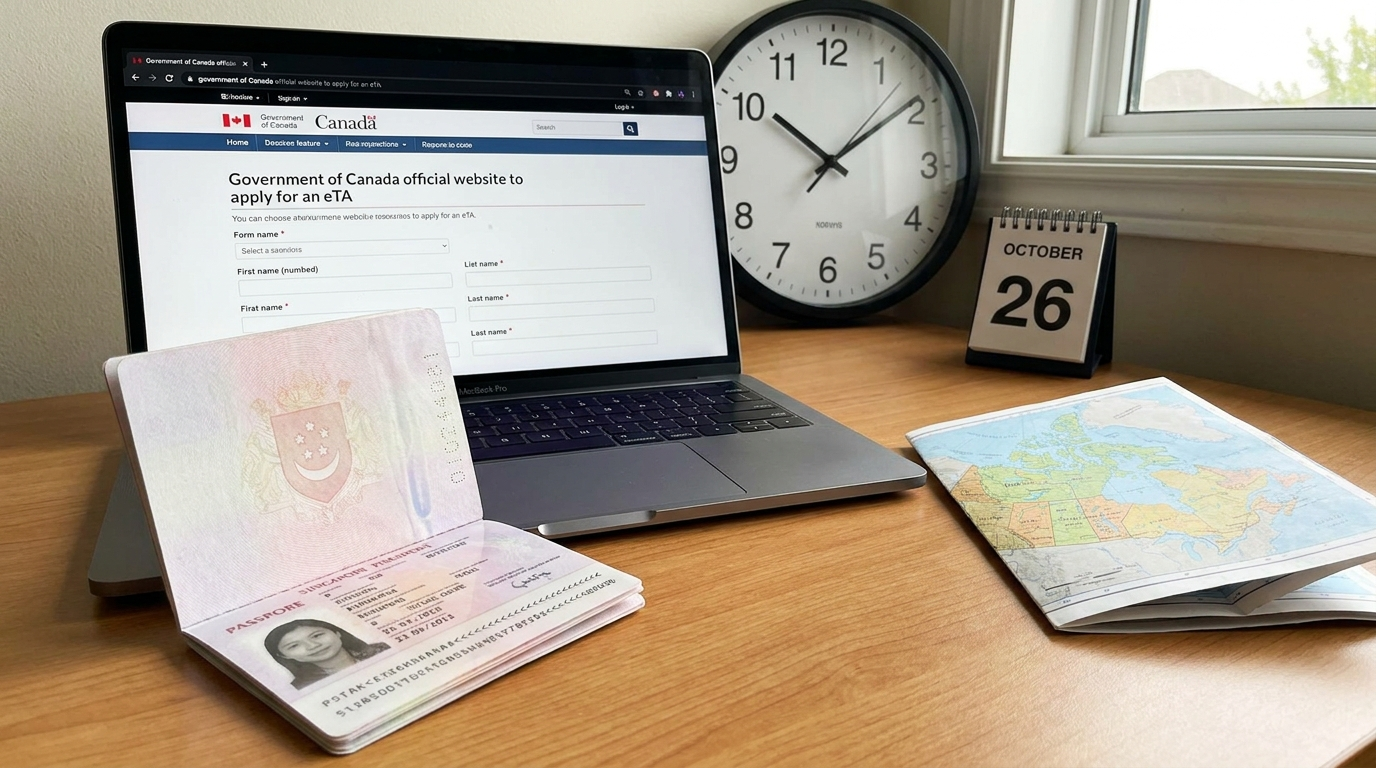
Most Singaporeans applying to visit Canada do not actually wait for a visa. They wait for an eTA, which usually comes back in minutes. The longer waits, the ones measured in weeks, mostly apply to people in Singapore who travel on a non-Singapore passport and have to file a full visitor visa.
This guide covers both paths. It walks through how long each one tends to take, where delays come from, and the timeline you should plan around if you have a flight in mind. Processing times shift week to week, so treat any number here as a planning baseline and pull the live figure from canada.ca before you commit to dates.
eTA: minutes for most Singapore passport holders
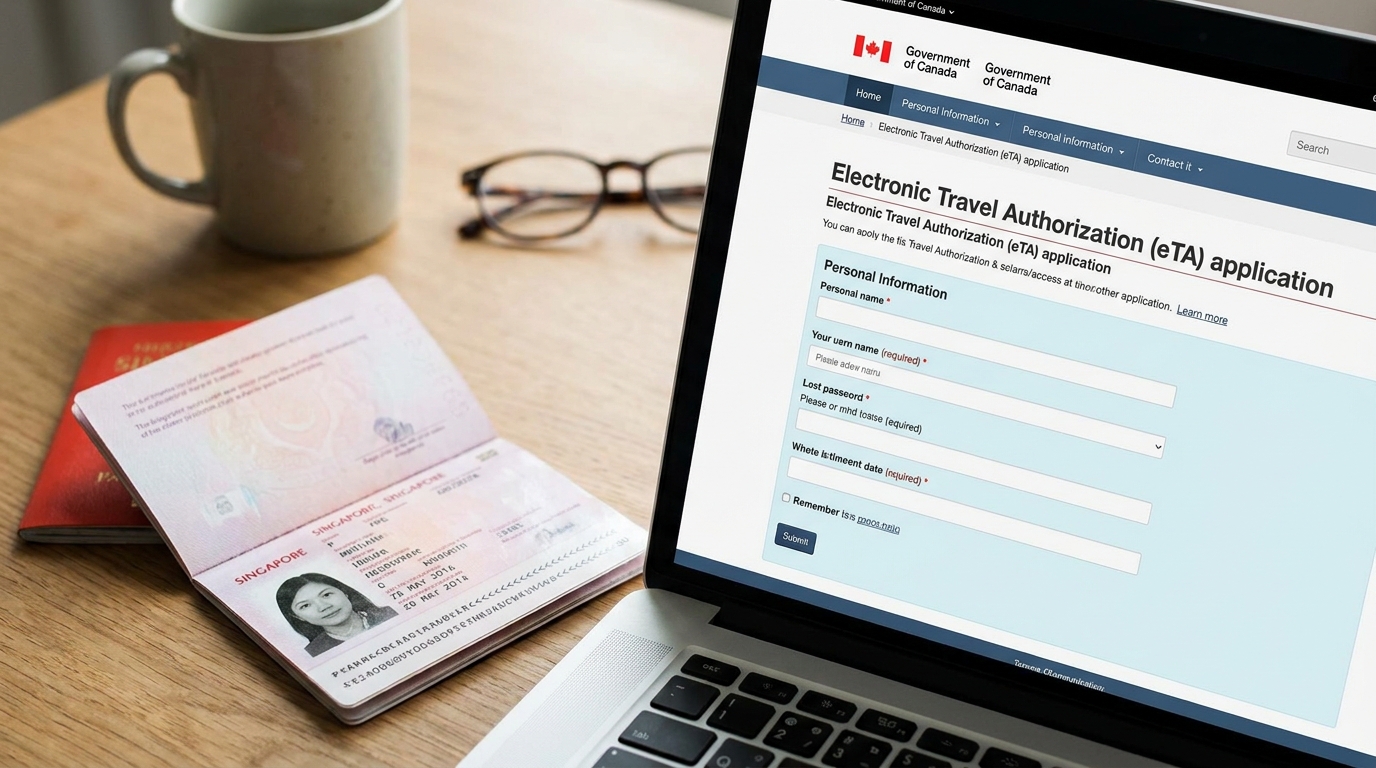
If you hold a Singapore passport and are flying to Canada, you apply for an Electronic Travel Authorization (eTA), not a visa. The fee is CAD 7 through the official canada.ca site, and most approvals arrive by email within a few minutes of submitting the form.
A small share of applications get flagged for review. When that happens, canada.ca says you can expect an email with next steps within 72 hours of applying, usually asking for more documents. Those cases can take several days. The eTA is valid for up to five years or until your passport expires, whichever comes first, so once you have it, you do not reapply for every trip.
IRCC’s own guidance is to apply before you book your ticket, not at a fixed cut-off before departure. Boarding can be refused if the approval has not come through. For anything more detailed on whether you fall into the eTA group or the visa group, see our guide on whether Singaporeans need a visa for Canada.
Visitor visa: a few weeks to several months, depending on where you apply
The visitor visa, formally called a Temporary Resident Visa (TRV), is what you apply for if your passport is not eTA-eligible. A Singapore PR who carries an Indian, Chinese, or Vietnamese passport falls into this group, for example.
IRCC publishes country-specific processing times that are updated regularly, and most visitor visa offices fall somewhere between a few weeks and a few months. Each office moves at a different speed depending on inventory and volumes. Pull the current Singapore figure from the canada.ca processing-times tool before locking in a plan rather than relying on a static range.
Two things to know about whatever number you see:
- The posted processing time includes the time it takes you to give your biometrics, according to IRCC’s own methodology page. If you drag your feet on the biometrics appointment, you eat into that window rather than getting it back.
- IRCC’s historical processing times for temporary residence are calculated from how long it took to finish 80 percent of recent applications. The remaining 20 percent took longer, sometimes much longer if anything in the file needs a second look.
What the biometrics step adds to your timeline
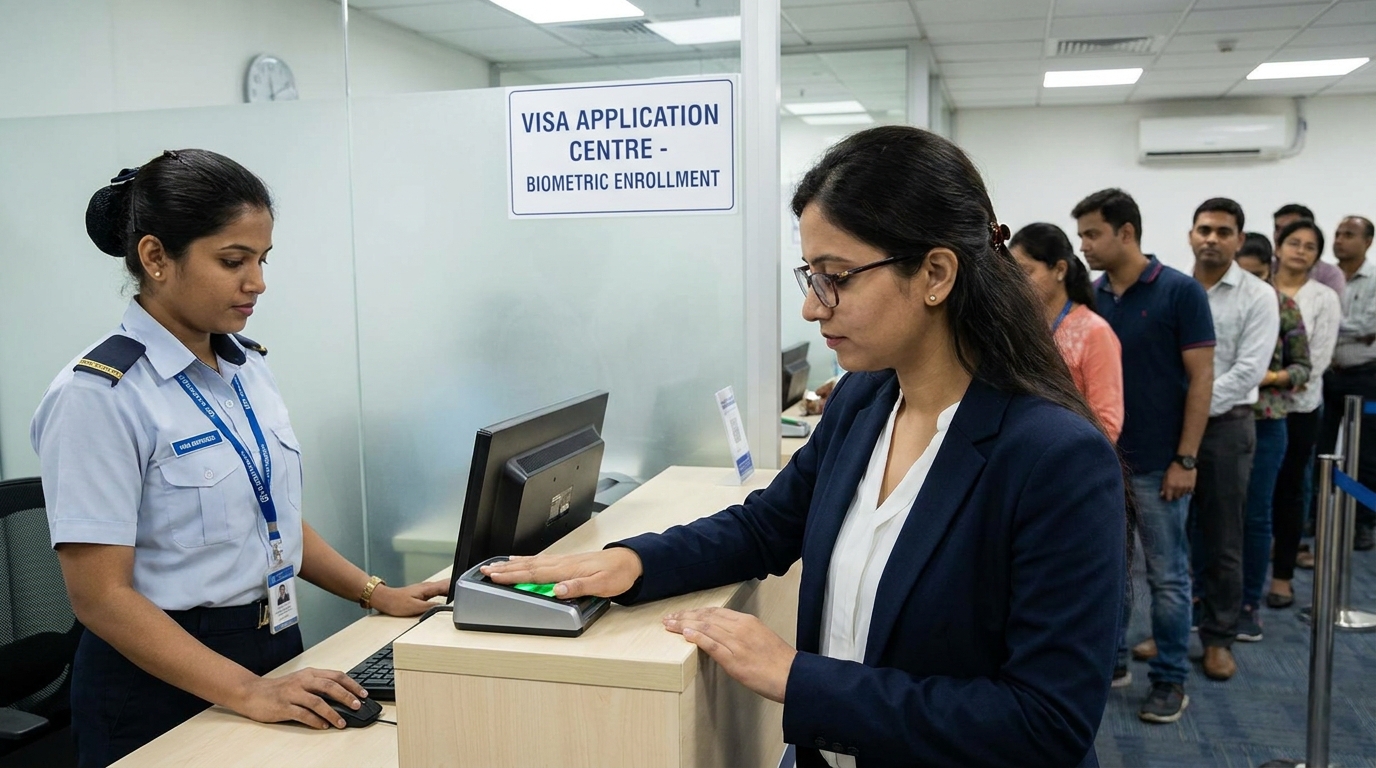
Biometrics are fingerprints and a photo, collected in person. For applicants in Singapore, the appointment is at the Canada Visa Application Centre (VAC) operated by VFS Global. Confirm the current address and booking link via the VAC list on canada.ca before you go, since VAC locations and opening hours can change.
A few practical points:
- IRCC’s instruction on the visitor visa apply page is to book your biometrics appointment “as soon as possible to avoid processing delays” once your biometrics instruction letter arrives. The letter itself sets the specific deadline for your case, so read it carefully.
- Book the slot as soon as the letter arrives. Wait times at the VAC vary; some weeks you can get in within days, other weeks it stretches past two weeks.
- Once collected, biometrics can stay on file for visa and permit applications for several years. A visitor visa can be issued for up to ten years or until your passport or biometrics expire, whichever comes first. If you gave biometrics for a Canadian visitor visa, study permit, or work permit recently, check your status on canada.ca before assuming you have to redo them.
If you submit the application but take three weeks to get fingerprinted, those three weeks are eating into the posted processing window, since the posted time already assumes you give biometrics promptly.
Applying from Singapore on a non-Singapore passport and unsure where to start? Send us your passport details and travel dates, and we will map out the timeline for your case.
Online vs paper, and why almost everyone is online now
Online submission through the IRCC portal is now the default. IRCC only accepts paper applications in narrow situations: applicants who can’t apply online (for example, because of a disability) and travellers using an identity or travel document issued to a refugee, stateless person, or non-citizen. For everyone else, it is online.
This is good news for processing time. Applications land instantly with IRCC instead of sitting in a courier bag, and document requests come back over email rather than by post. If you are reading older guides that mention couriering forms to a Visa Application Centre, ignore that workflow. It does not apply to most travellers anymore.
What pushes a file past the median
A few things consistently slow visitor visa applications down, even from Singapore:
- Incomplete supporting documents. Missing a bank statement, employment letter, or proof of accommodation usually triggers a request letter, which can add two to four weeks.
- Weak ties to Singapore. Officers look for evidence you will go back home. Recent job changes, no fixed address, or no dependants can prompt a closer review.
- Past refusals. A previous Canadian or US refusal in your record usually means a longer second look, even if the refusal was minor.
- Travel history. A clean history of trips to Schengen, the UK, or Australia helps. A blank passport on a first major-country application gets scrutinised more.
- Family members travelling with you. A multi-person application moves at the speed of the slowest profile in it.
None of these are dealbreakers. They just mean the file is unlikely to come back at the fast end of the range.
Fees and where the money goes
For a Singapore-filed visitor visa, expect total costs of around SGD 325 to SGD 395 depending on whether biometrics are required. The breakdown:
- Government visa fee: CAD 100 (about SGD 100)
- Biometrics fee: CAD 85 (about SGD 85), capped per family
- VAC service fee at VFS Global: roughly SGD 50 to SGD 60
- Courier and SMS notification add-ons if you choose them
The eTA, by contrast, is CAD 7. Anything more than that on a Singapore passport application is a third-party markup, not a government fee. Use the canada.ca domain directly. For a closer look at the visitor visa application itself, our Canada visitor visa application guide walks through the forms and supporting documents.
How to plan around the wait
A reasonable plan for a Singapore passport holder: apply for the eTA, get the approval that afternoon, then book your flight. The whole process can be a single evening.
For a visitor visa from Singapore, allow eight to ten weeks from start to flight. That covers the application, biometrics appointment, IRCC review, and a buffer for document requests. Anyone with a refusal history, a complex travel profile, or a tight conference or wedding date should give it twelve weeks to avoid surprises.
If you have a fixed travel date and a thin window, the safer move is to start the application early rather than try to expedite later. IRCC does not formally offer paid expediting for visitor visas, and the urgent-processing route only applies to narrow categories like medical emergencies and funerals.
Have a fixed travel date and need a realistic timeline for your case? Message us with your passport type and trip details and we will tell you what is feasible.