

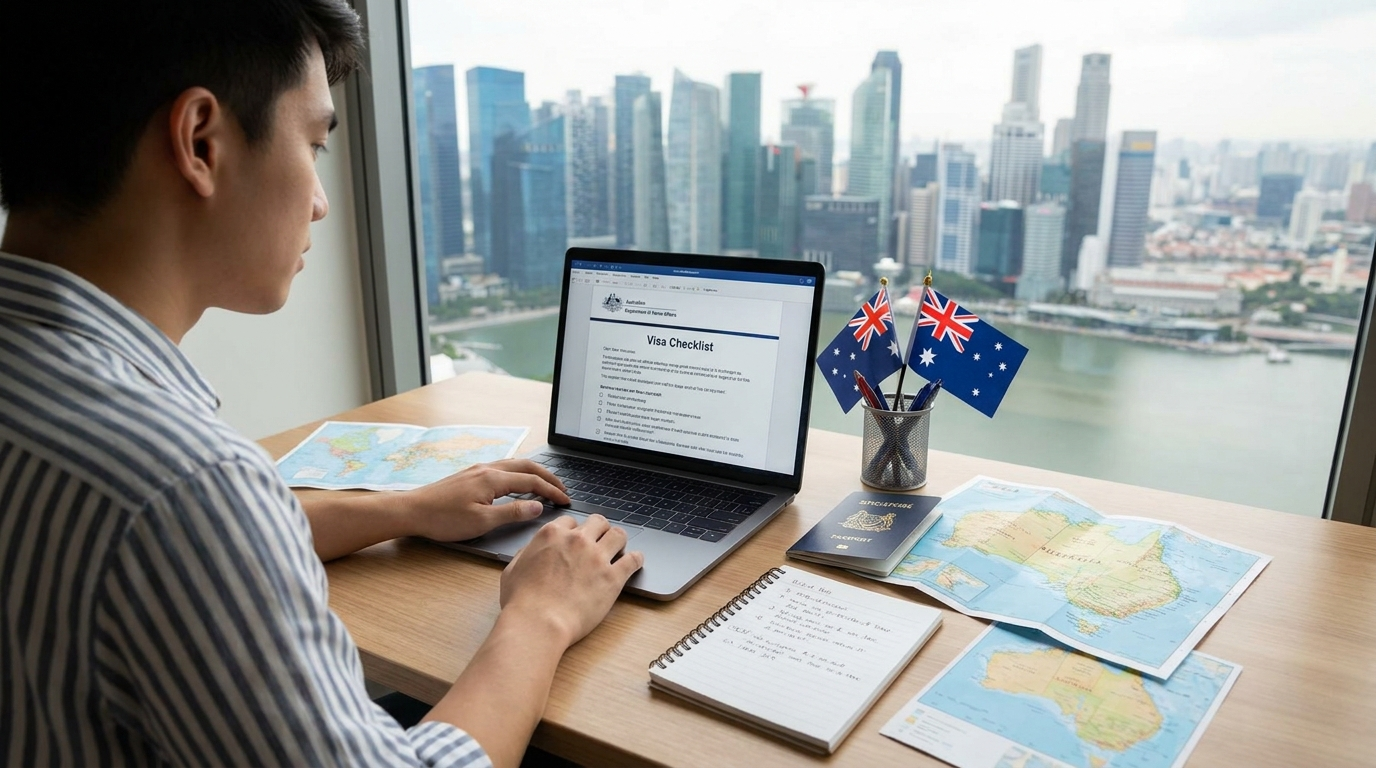
Singapore and Australia signed a reciprocal Work and Holiday arrangement in 2017, which means Singaporeans aged 18 to 30 can spend a year in Australia on a visa that lets them work and travel. The people we see on it tend to be NUS or NTU graduates between jobs, early-career professionals taking a deliberate break, or ORD’d NSmen who want a year abroad before settling into a career.
The visa you want is Subclass 462, not Subclass 417. These get confused constantly, and mixing them up will cost you the application fee.
Subclass 462 vs 417: why Singaporeans get 462
Australia runs two parallel working holiday programs. Subclass 417 is the Working Holiday visa, open to passport holders from countries like the UK, Germany, Japan, and Korea. Subclass 462 is the Work and Holiday visa, for countries with a reciprocal bilateral arrangement with Australia. Singapore is on the 462 list.
The eligibility rules differ in ways that matter. The 462 has a tertiary education requirement; the 417 does not. The 462 has annual country caps; the 417 is uncapped for most eligible countries. For Singapore passport holders, 462 is the only option. The Department of Home Affairs will refuse a 417 application lodged on a Singapore passport.
If you hold dual citizenship and your second passport is on the 417 list, you can apply on that one instead. That is the one legitimate workaround.
Eligibility for Singapore passport holders

The core requirements for a Singaporean applying for the Australia work visa from Singapore are:
- Singapore passport, valid for the full stay
- Aged 18 to 30 at the time of application (a few countries qualify up to 35, but Singapore is not one of them)
- No dependent children accompanying you
- Completed at least two years of tertiary study, or hold a qualifying degree
- Functional English
- Around AUD 5,000 in personal funds, plus a return ticket or the funds to buy one
- Meet health and character requirements
- You must be outside Australia when you lodge and when the visa is granted
Two points trip Singaporeans up. The age cap is strict: if you turn 31 before you apply, you are out. Apply before your 31st birthday, even if the grant happens later. The tertiary requirement also catches people who assume their polytechnic diploma counts. A diploma alone is usually not enough. The Department typically looks for two full years of a bachelor’s program or a completed diploma plus further study.
Unlike some 462 countries, Singaporeans do not need a government letter of support. The reciprocal arrangement with Australia removed that step.
The annual cap and when to apply
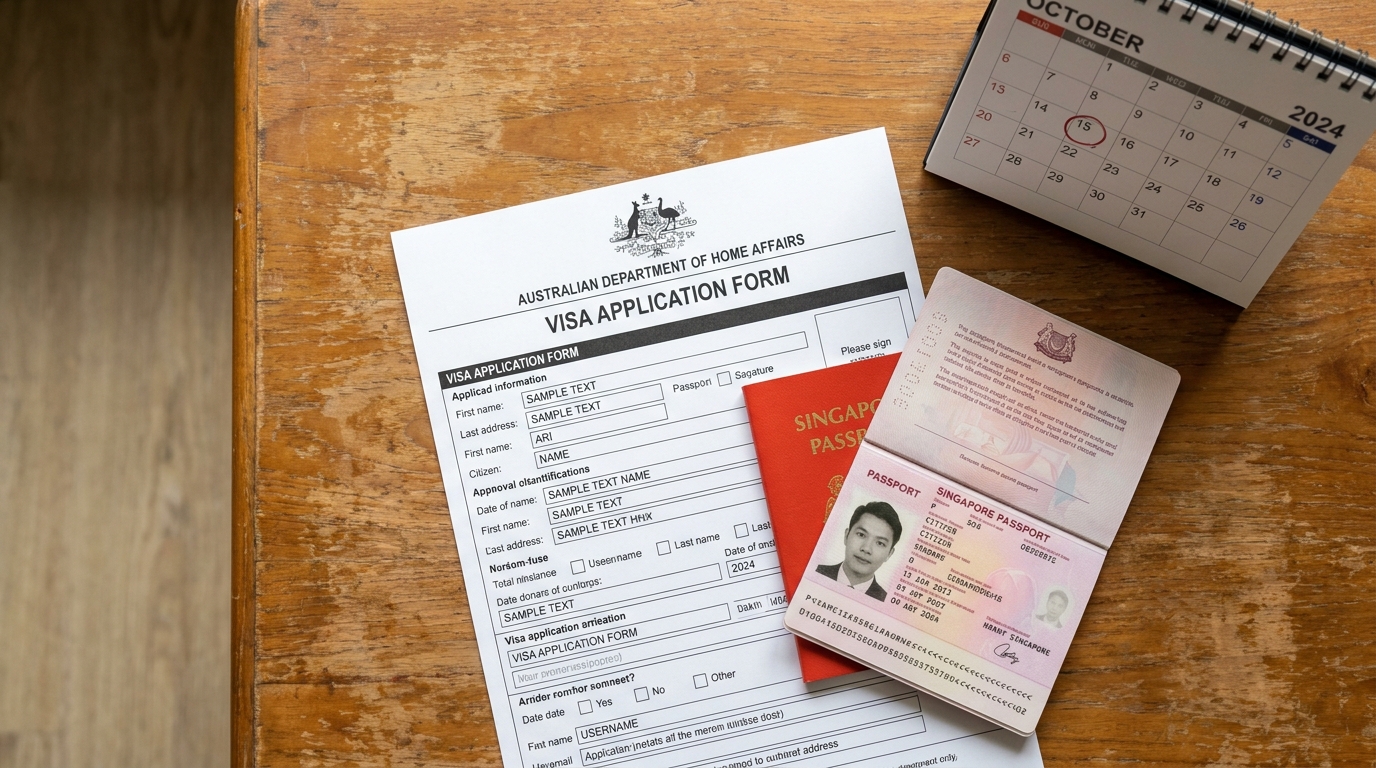
Singapore’s annual quota for the 462 is 500 places and it resets on 1 July each year. Five hundred is not a lot. The cap can fill within the first few months of the program year, and once it hits zero you wait until the next 1 July. Apply close to 1 July if you want flexibility on your start date.
You do not have to travel immediately after the grant. The 462 gives you 12 months from the grant date to enter Australia for the first time, and the 12-month stay clock starts on your first entry. A Singaporean granted the visa in August can plan an arrival in April the following year without losing time.
The cap applies to applications, not grants. An application counts against the quota as soon as it is processed, even if refused, so your lodgement needs to be clean the first time.
How the application works
The whole process runs online through ImmiAccount. You do not lodge through the Australian High Commission in Singapore and there is no paper form to submit.
The sequence is:
- Create an ImmiAccount on the Department of Home Affairs website
- Start a new Subclass 462 application
- Upload passport bio page, evidence of tertiary study, proof of funds, and any health or police documents requested
- Pay the application fee by card
- Wait for the decision, usually delivered by email
Processing is generally fast for Singapore passport holders. Clean applications often clear within two to four weeks. Biometrics may be requested; a health examination is rare for a first-time 462 applicant with no medical history flags.
The most common reason Singapore applicants get held up is sloppy documentation. Your documents are already in English, so there is no excuse for mismatched names across your passport, academic records, and bank statements. Get those consistent before you upload.
Fees and funds
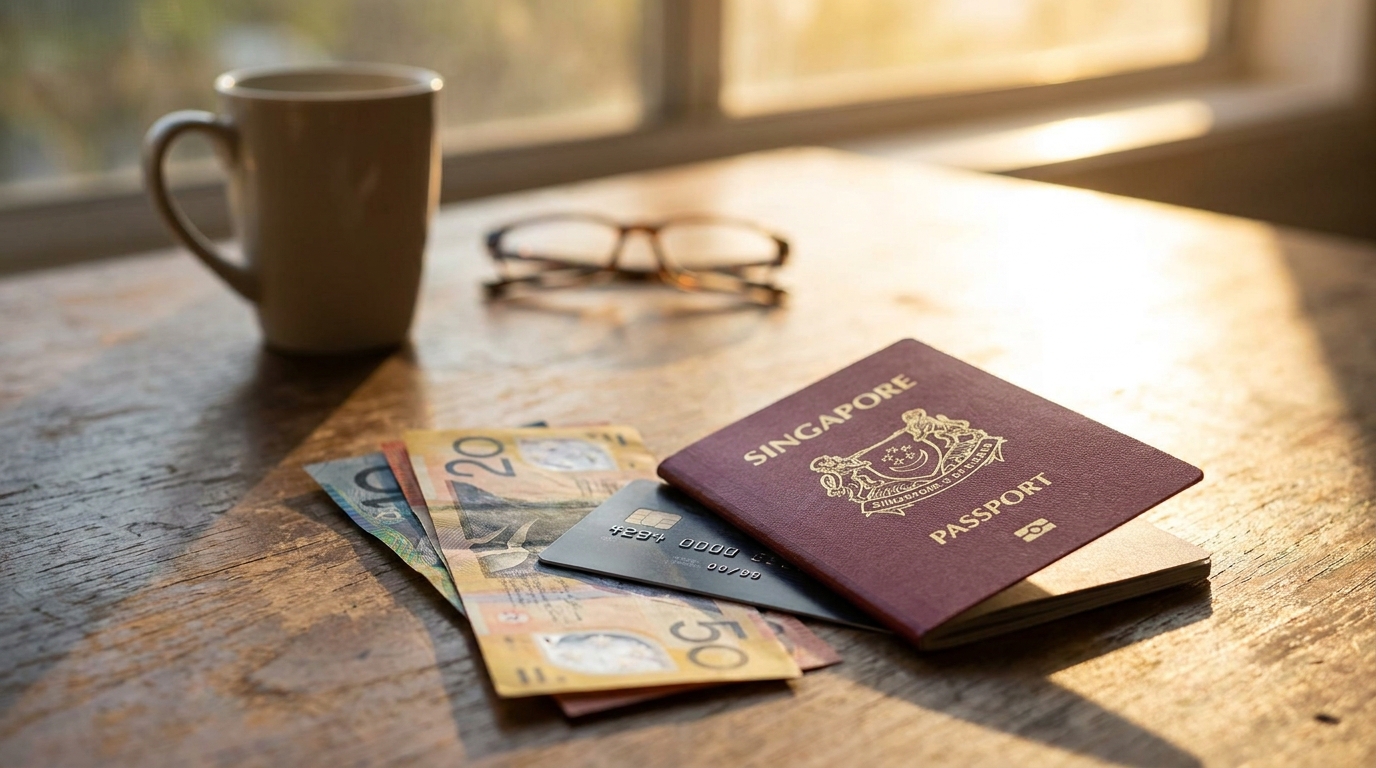
The application charge for Subclass 462 is AUD 650 as of the current fee schedule. The Department indexes this most July cycles, so confirm the figure on the Home Affairs website before you pay. The 462 is a single-applicant visa, so there is no secondary applicant fee and you cannot add a partner or children.
Budget for a health examination at a Singapore panel clinic if requested (around SGD 350 to SGD 500), a Singapore Police Force certificate if requested, and Australian health insurance for the stay. Insurance is not legally required for 462 holders but is a practical necessity given Australian healthcare costs for non-residents.
The AUD 5,000 funds figure is not a formal minimum, but it is what the Department expects you to evidence if asked. A recent bank statement showing that amount in accessible funds is the simplest way to demonstrate it.
Not sure whether your qualifications meet the tertiary requirement? A short consultation can tell you whether you qualify before you spend AUD 650 finding out the hard way.
What you can actually do on the visa
The 462 gives you 12 months in Australia with work and study rights, but both have limits that surprise people.
Work: you can work for any employer, but no more than 6 months for the same employer unless you get special permission. Six months is a calendar six months, not a full-time equivalent. If you start a farm job in March and stop in August, you have used six months even if you only worked three days a week.
Study: up to four months of formal study in total across the whole stay, including English language, short certificates, or diplomas. If you want to study longer, you will need a student visa. Our Australia student visa from Singapore guide covers that pathway.
Travel: unlimited entries and exits during the 12 months. You can use the visa as a base for trips to New Zealand, Southeast Asia, or anywhere else, as long as you come back before it expires.
The 462 is a temporary visa. It does not lead directly to permanent residency and it does not count as qualifying time toward citizenship. What it does do is give you a year of Australian work experience, which is useful if you later apply for a skilled visa or want to build a case for employer sponsorship.
Second and third year extensions
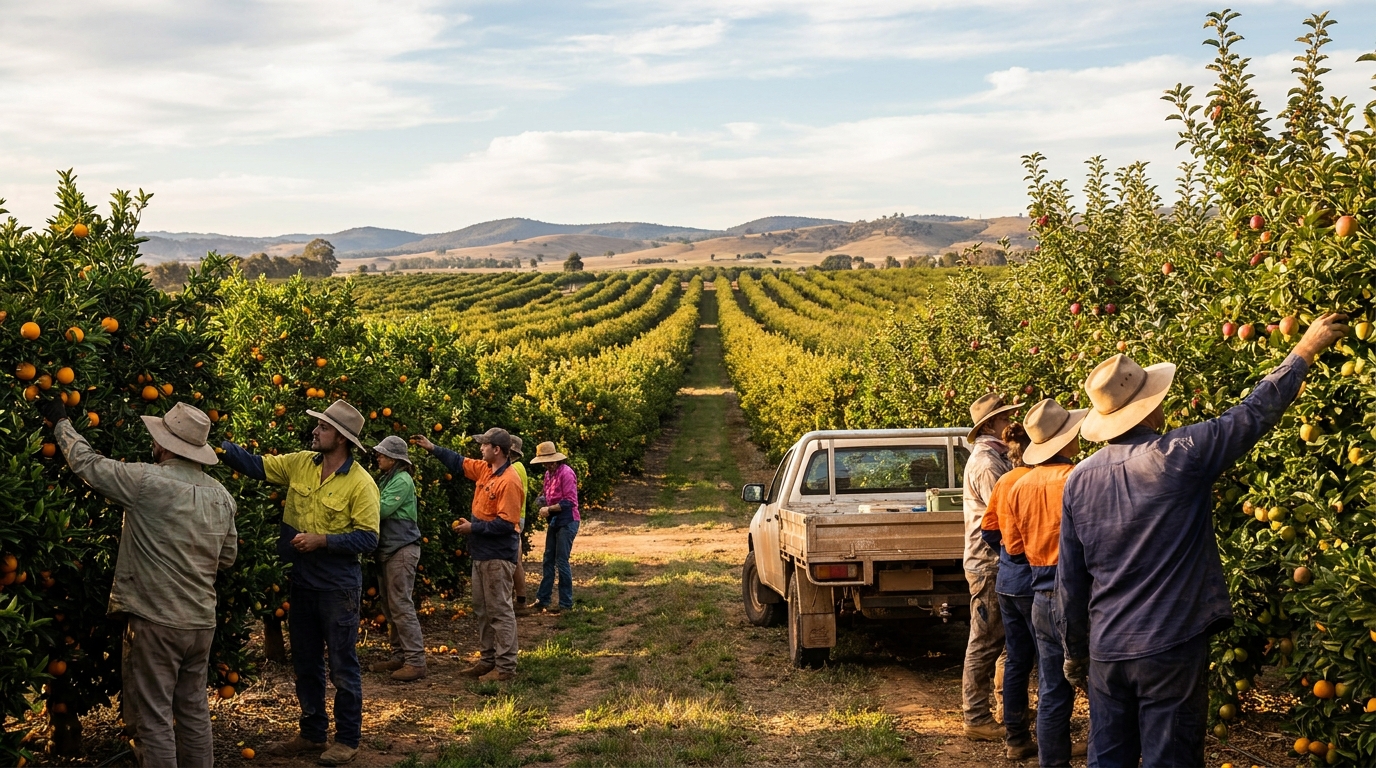
Subclass 462 can be extended to a second year, and then a third. Each extension requires three months (88 days) of “specified work” in a specified industry in a designated regional area during the previous visa.
Specified work generally covers plant and animal cultivation (fruit picking, planting, farm work), fishing and pearling, tree farming and felling, construction in northern Australia, tourism and hospitality in northern Australia, and bushfire recovery in declared areas.
The designated regional areas are listed by postcode on the Department’s website. Sydney, Melbourne, Brisbane, Perth, and the Gold Coast do not qualify. Most of regional New South Wales, Queensland, Western Australia, and all of the Northern Territory do.
Specified work must be paid, documented with payslips and employer declarations. Volunteer work and cash-in-hand farm jobs do not count. Keep clean records from day one. A third-year extension requires six months of specified work during your second year. Three years total is the maximum.
Common pitfalls for Singaporeans
The mistake we see most often is applying for the wrong subclass. The system will sometimes let you start a 417 application before catching the eligibility mismatch, and people lose fees and time that way. Confirm Subclass 462 before you pay.
Second: leaving the application too late. If the Singapore cap is already full when you lodge, you will be refused outright and forfeit the fee. Apply in early July when the new program year opens.
Third: misreading the tertiary study requirement. A polytechnic diploma without additional bachelor’s-level study is often not enough on its own. If you have any doubt, get a formal check before you apply.
Fourth: underestimating the 6-month employer rule. If you want a full 12 months of income, plan two jobs from the start. Staying at one employer for the full year without prior approval breaches the condition and can lead to visa cancellation.
Finally, the 462 is a popular first step for Singaporeans who later want to migrate. If that is the long game, start building the documentation a future skilled visa will need from your first week in Australia: payslips, employer references, any formal training. Our Australia migration agent Singapore guide covers when that strategic planning is worth paying for.
Planning to use the 462 as a path toward longer-term migration? We can map the pathway from Work and Holiday to skilled visa or PR so your year in Australia builds toward something.