

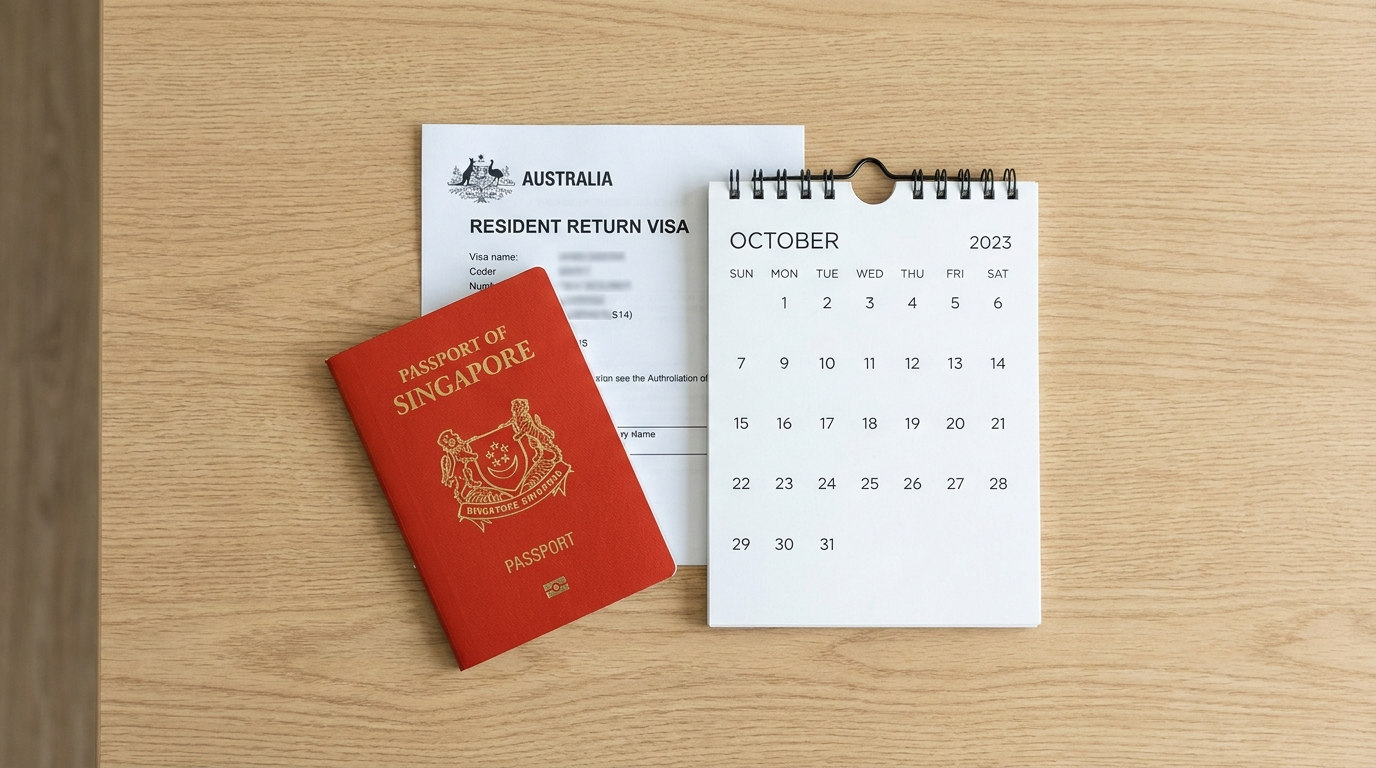
Getting Australia PR is the hard part. Keeping it active if you spend time outside the country is the quieter problem nobody thinks about until their travel facility is a month from expiring. The Resident Return Visa is what lets you leave Australia and come back as a permanent resident once the five-year travel facility on your original PR visa runs out.
Plenty of Singaporeans hold Australian PR while still living or working in Singapore, often to keep one foot in both places before fully relocating. That arrangement works, but only if the RRV is in order. If you want the upstream view of the PR track itself, our how to apply for Australia PR piece covers the application side; this one is about what happens after.
What the RRV actually is
Your Australian PR visa does not expire. The travel facility on it does. Every permanent visa grants you five years of unlimited travel to and from Australia. Once those five years are up, your PR status still stands inside Australia, but you lose the right to leave and come back as a resident. An RRV replaces that travel facility with a new one, so you can carry on flying in and out.
Two subclasses sit under the RRV umbrella. Subclass 155 is the long-form visa and can grant either five years or one year of travel, depending on how much time you have spent in Australia and what ties you hold. Subclass 157 is the short-form version for people who do not yet qualify for the 155, and it grants three months.
Most Singaporeans end up applying for the 155. The 157 is narrow and rarely the right tool.
Do I need a Resident Return Visa
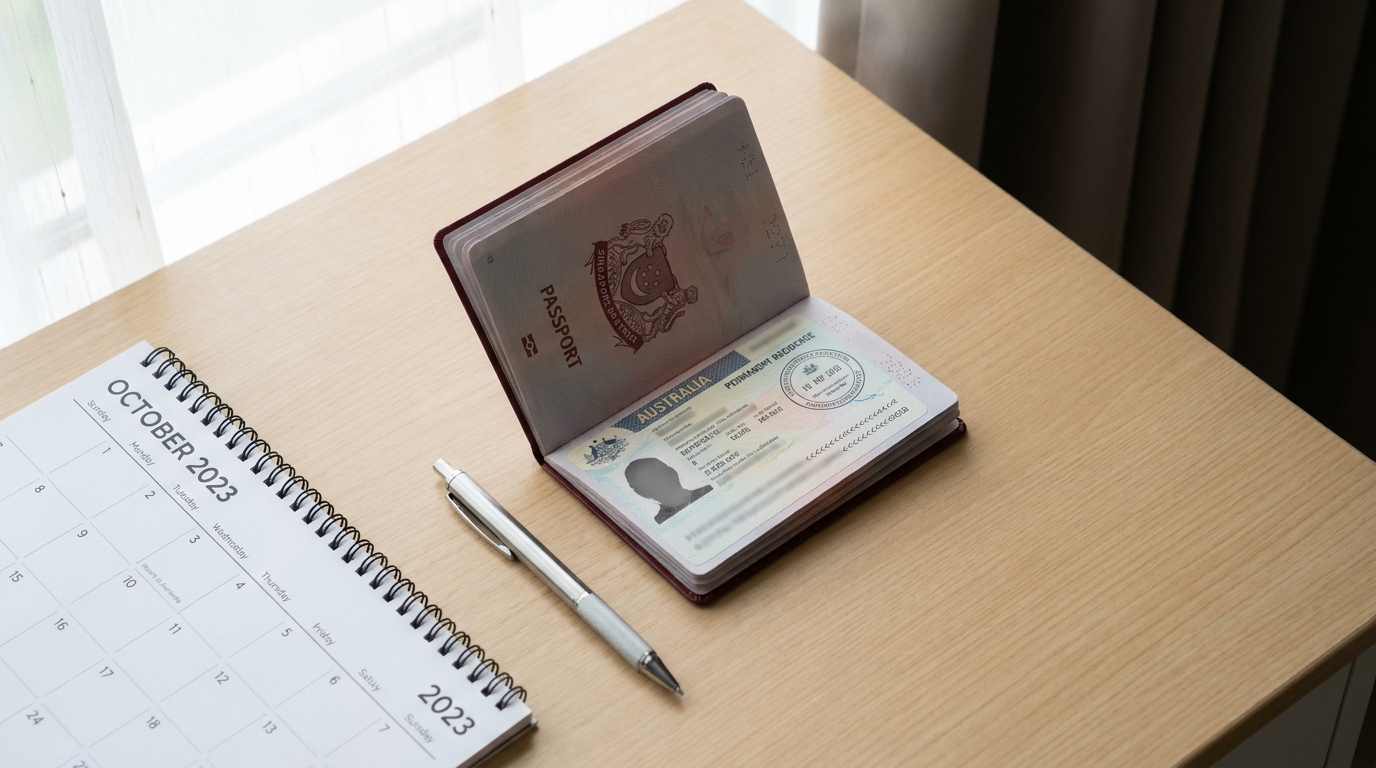
You need one if you are an Australian permanent resident and your current travel facility is about to expire, has already expired, or will expire while you plan to be overseas.
Check the exact expiry date on your grant notification, not your passport sticker. The travel facility dates are printed in your visa grant letter. If you are inside Australia and the facility expires, nothing immediate happens, but you cannot leave and return until you have a new RRV. If you are overseas and it expires, you are grounded until you get one.
Singaporeans who spend most of their time in Singapore and only visit Australia periodically are the ones most likely to run into this. The five years passes faster than you expect, especially if the PR came through during a period when you were not using it actively.
Subclass 155 five-year facility
This is the one you want. It grants five more years of travel and effectively resets the clock on your PR. To qualify, you need to have been physically present in Australia as a permanent resident for at least two years in total out of the last five. The two years do not need to be continuous. Weekend trips, long stays, a year spent working in Sydney and scattered months over the following years all count, as long as it adds up.
The Department of Home Affairs checks this against your movement records, which they get directly from border crossings. There is no grace and no rounding up. If you spent 700 days in Australia over the last five years, you qualify. 720 days is closer to the line than it looks, because they count to the day.
Subclass 155 one-year facility
If you fall short of the two years, the 155 can still grant you a one-year travel facility on the basis of substantial ties to Australia of benefit to Australia. This is a discretionary test and the Department reads it reasonably strictly.
Substantial ties typically means business, employment, cultural, or personal ties. A job with an Australian company, ownership of Australian property, a partner or immediate family in Australia, ongoing business interests, or professional registration with an Australian body all help. The stronger and more documentable the ties, the more comfortable the assessor is granting the one-year facility.
Vague ties do not clear the bar. Holding an Australian bank account you rarely use or visiting twice a year for holidays is not enough on its own. Case officers are used to seeing applicants pad this section and they will weigh the evidence, not the claim.
Close to your travel facility expiry and unsure which RRV subclass to lodge? Our registered agents assess your residence record and ties before you pay the fee.
Australian PR renewal online: how the application works

The RRV is lodged online through ImmiAccount, the same portal used for the original PR application. You log in, start a new application under Resident Return Visa (subclasses 155 and 157), and work through the form. There is no separate “renewal” product. The RRV is the renewal.
The fee as of late 2025 is AUD 490 for the online application. Paper applications cost more and take longer, so the online route is the default. You will need your passport details, your current visa grant information, your movement history if you are claiming the two-year residence test, and evidence of ties if you are going the discretionary route.
Processing is fast for straightforward 155 applications. The Department publishes a range running from same-day to around 32 days for five-year 155 cases. One-year 155 applications based on ties take longer, usually a few weeks to a couple of months, because a case officer has to weigh the evidence. Subclass 157 applications sit on a similar timeline.
You can lodge from inside or outside Australia. Most Singaporeans lodge from Singapore, which is fine. The visa is granted electronically and linked to your passport, so there is no sticker to collect.
Timing: when to apply
Apply before your current travel facility expires, not after. If you are planning overseas trips in the next twelve months, check your grant letter now. If the facility expires during or just before a trip you cannot move, lodge the RRV at least a few weeks ahead to leave room for processing.
If your facility has already expired and you are inside Australia, there is no penalty for applying late. Your PR status is intact; you simply cannot travel until the RRV is granted. If your facility has expired and you are outside Australia, you still apply for the RRV from overseas, but you cannot return until it is granted. This is the expensive version of the mistake, because it can mean postponed flights, rebookings, and work disruption.
Children under 18 who were included on the original PR grant need their own RRV when they travel. The two-year residence test looks at each applicant individually. If a child spent most of the last five years in Singapore while a parent clocked time in Australia, the child may need to apply under the ties test or the 157.
Where Singaporeans get this wrong
Two patterns repeat. The first is assuming PR means you can come and go forever. The travel facility is a separate clock, and it is the one that matters once five years pass. The second is assuming “substantial ties” is a low bar. It is discretionary, and thin evidence produces thin results. If you are planning to rely on ties rather than residence days, build the paper trail early.
The other one is leaving it to the last week. Online processing is usually quick, but “usually” is not a guarantee, and a case that gets referred for manual review can easily run three to four weeks. Lodging a month out costs nothing and removes the risk. Our Australia PR requirements page covers the initial PR side if you or a family member is still in that earlier stage.
Planning to travel and your five-year facility is running down? Our team walks you through the 155 or 157 choice, assembles the evidence, and lodges the application so you are not rebooking flights.