

The Australia transit visa fees question has a short answer: there are none. The Subclass 771 Transit Visa is free. No application charge from the Department of Home Affairs, no service fee through ImmiAccount, AUD 0 in 2026.
That makes it unusual in the Australian system, where almost every other visa carries a non-refundable charge. But “free” is not the same as “automatic,” and for most Singaporean travellers the more useful question is whether you need a transit visa at all. Plenty of layovers don’t.
Australia transit visa price: what you actually pay
The Subclass 771 application charge is AUD 0, regardless of where you apply from.
The only out-of-pocket items that ever come up are tied to specific case-officer requests. Police certificates run on Singapore Police Force fees if requested. Medical examinations, if your declared health history triggers them, will typically run a few hundred Singapore dollars. Document translations apply for any supporting document not already in English.
For a clean Singapore application, none of these usually apply. The full cost stays at zero. For comparison against other Australian visa categories, our Australia visa fees breakdown covers what every other subclass charges.
When Singaporeans actually need a transit visa
Singapore citizens hold one of the strongest passports for transiting Australia, and most short layovers don’t require any visa at all.
Transit Without Visa (TWOV)
Singapore is on the Department of Home Affairs list of nationalities eligible to transit without a visa. The conditions are specific: you transit Australia by air within 8 hours of arrival, you hold a confirmed onward booking, you have all documentation needed to enter your destination country, and you stay inside the airport transit area without passing through immigration.
Meet all four and you are deemed to hold a Special Purpose Visa for the duration of your transit. No application, no paperwork, no fee. That covers the typical Sydney or Melbourne layover most Singaporean travellers will ever encounter.
When TWOV does not apply
You need a Subclass 771 (or a different visa entirely) once any of these is true: your layover exceeds 8 hours, you need to leave the transit area to collect checked luggage and re-check it on a separate ticket, you want to clear immigration to spend the layover outside the airport, or you are travelling on a passport other than Singaporean (a PR holder on a third-country passport, for example).
The Subclass 771 covers stays of up to 72 hours specifically for transit purposes. If you actually want to leave the airport for sightseeing during your stopover, the Australia ETA is usually the better fit. It gives you up to 90 days at a time and allows real tourism, not just transit.
Subclass 771: who qualifies
Eligibility is straightforward, but every condition is checked.
Your reason for entering Australia must be transit. Not a quick coffee with friends, not a half-day business meeting, not a city tour. If any of those are your real intention, apply for an ETA or Subclass 600 instead, because case officers will read your itinerary and ask.
You must hold a confirmed onward ticket departing Australia within 72 hours of arrival. The 72-hour limit is firm. Crew members joining a ship beyond that window need a different visa class.
Your passport has to be valid for the duration of your transit. Six months remaining is the practical floor, mostly to satisfy the immigration rules of wherever you’re heading next.
If your onward destination requires a visa, you must already hold it before applying. Australia will not authorise a transit toward a country where you can’t legally enter.
Standard health and character checks apply, just like every other Australian visa. Declared convictions or significant medical conditions can pull the application into a slower review queue.
How to apply for the Subclass 771
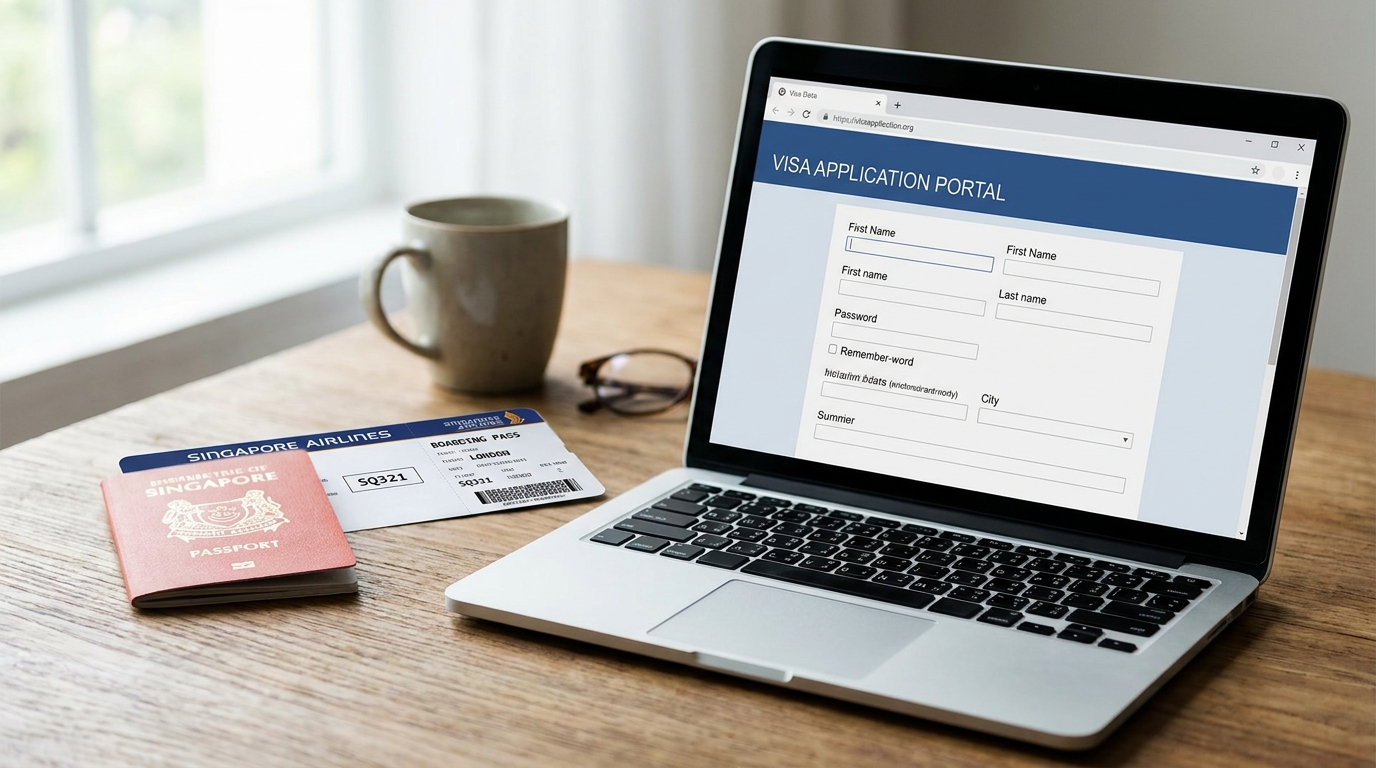
The application is online through ImmiAccount, the same portal used for every other Australian visa.
- Create or log into your account at the ImmiAccount login portal.
- Select “New application” and choose Transit Visa (Subclass 771).
- Complete the form with your personal details, passport information, and travel itinerary.
- Upload supporting documents: passport bio page, confirmed flight bookings showing arrival into and departure from Australia within 72 hours, plus any onward visa for your final destination if required.
- Submit. There’s no payment step; the visa is free.
You’ll get an acknowledgement email immediately. The actual decision can take anywhere from a day to a couple of weeks depending on whether your case needs review. For full guidance on what to expect after submitting, see our Australia visa processing time article.
Documents to have ready
Have these on hand before you start the form: passport (bio page scan, all pages), confirmed e-tickets for both your arrival and onward flights, visa or entry authorisation for your onward destination if applicable, and any details of previous Australian visas or refusals.
If you’ve travelled to Australia before, the system flags your existing record. Make sure the details on your current application match exactly. Mismatches between an old record and a new application are one of the easier ways to slow your case.
Processing time and when to apply
Most Subclass 771 applications from Singapore are decided within a few business days. The official range is wider. A clean application typically lands inside 14 days. Anything with a character or health declaration can stretch to 32 days. Outliers with referred checks can run longer than that.
Apply at least two to three weeks before your travel date. There is no expedited processing for transit visas, and the Department of Home Affairs explicitly does not recognise a confirmed flight booking as a reason to fast-track. Leave it to the last week and you’re risking the flight, not the visa fee.
For travellers who realise mid-trip that they’ll need longer than 72 hours in Australia, the answer is to apply for a Subclass 600 Visitor Visa before you arrive. You cannot extend a transit visa once it’s granted.
Need to confirm whether you need a transit visa or an ETA? A short consultation with our team can save you the time of applying for the wrong visa, especially if your layover is borderline on the 8-hour rule.
Common mistakes Singaporeans make
A few patterns come up repeatedly with transit visa applications and last-minute layovers.
The first is assuming TWOV always applies. The 8-hour airside rule is precise. A 9-hour layover, an overnight connection, or a separate-ticket itinerary that requires you to collect luggage all knock you out of TWOV eligibility, and that’s a surprise nobody wants at the gate.
The second is applying for a transit visa when an ETA is the right call. If you want to spend your layover in Sydney CBD or Melbourne for sightseeing, the transit visa won’t cover that. The ETA does, costs AUD 20, and is granted in minutes for most Singaporeans.
A third is skipping the onward visa check. Australia won’t approve a transit visa if your destination country needs a visa you do not hold. Sort the onward visa first, then apply for the Australian transit visa.
Last-minute applications are the fourth. Even though the visa is free, the processing time is not. Plan two to three weeks ahead.
And finally, treating an old transit visa as reusable. Each Subclass 771 is single-purpose for a specific transit. Transit Australia again on a separate trip and you apply again from scratch.
Transit Visa vs ETA vs Subclass 600
If you’re unsure which visa you actually need, the choice usually comes down to what you plan to do during your time in Australia.
| Situation | Best option |
|---|---|
| Airside transit under 8 hours | No visa (TWOV) |
| Airport transit 8 to 72 hours, no sightseeing | Subclass 771 Transit Visa (free) |
| Stopover with sightseeing, up to 90 days | Australia ETA (AUD 20) |
| Stay longer than 90 days, or PR holder on non-Singapore passport | Subclass 600 Visitor Visa (AUD 200 offshore) |
The transit visa exists for a specific edge case. For most Singapore travellers planning a stopover with any time outside the airport, the ETA is simpler and more flexible despite the small fee.
Planning a more complex itinerary through Australia? Our consultants can confirm the right visa pathway based on your route, layover length, and what you want to do on the ground. Talk to us before you book.